


Bobs are everywhere in 2026. You see them on red carpets, in office hallways, and all over your social feed. But when you ask for “a bob with some movement,” your stylist may ask a hard question: layered or choppy?
The two cuts look alike at first glance. Both are short. Both have shape. Both can look chic. Yet they behave very differently once you leave the salon. One gives you soft, smooth flow. The other gives you edge, grit, and lots of texture.
This guide breaks it all down in plain English. You will learn what each cut is, how they differ, and which one fits your hair type and face shape. You will also get a simple script to take to your stylist, plus a clear look at daily upkeep.
What a Layered Bob Is

A layered bob is a bob where the hair is cut at different lengths to build shape. The layers are usually blended. That means you do not see harsh lines between them. The result is a soft, rounded, flowing look.
Most layered bobs sit between the chin and the collarbone. The shortest layers often start near the cheekbones or jaw. The longer layers fall below. This creates movement, so your hair swings when you walk.
Layers also remove weight. When hair is cut at different lengths, it stops hanging in one heavy block. It lifts at the roots and bends at the ends. That is why many people with thick or flat hair love this cut.
Here are the main traits of a layered bob:
- Smooth, blended transitions between lengths
- Soft ends that curve in, flip out, or stay straight
- A polished and classic feel
- Easy to style with a round brush or flat iron
- Works well for both casual and formal looks
Think of it as the refined cousin in the bob family. It looks neat even when you do very little. It also grows out gracefully, which is a big plus for busy people.
What a Choppy Bob Is
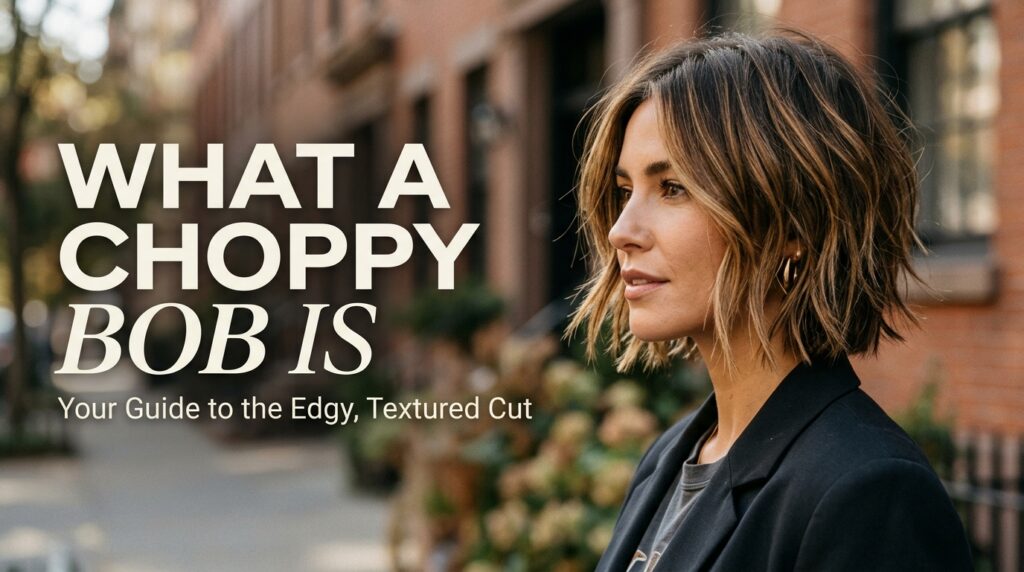
A choppy bob is cut with sharp, uneven pieces. The stylist often uses a razor, point cutting, or a slicing technique. The ends are not smooth. They look broken up on purpose. That is where the word “choppy” comes from.
The look is bold and a little messy in the best way. It feels relaxed, youthful, and full of attitude. Hair seems to dance in separate strands rather than flow in one sheet.
The cut is built on texture. Instead of soft layers that blend, you get short, jagged pieces that stand apart. This makes the hair look thicker at the ends, even if your strands are thin. That is a key reason fine-haired people often choose it.
Common traits of a choppy bob include:
- Uneven, piecey ends
- Lots of visible texture
- A lived-in, effortless vibe
- Often paired with bangs or face-framing pieces
- Best styled with texture spray or a light paste
choppy chin length bob
The choppy chin length bob is one of the most popular versions in 2026. It lands right at the jawline or just below it. It is short enough to feel fresh and long enough to still tuck behind your ear.
This length shows off your jaw and cheekbones. It also keeps hair out of your face and off your neck, which is nice in warm weather. Because the cut is short, the choppy ends become the star of the show.
Here is why people love it:
- It is quick to style, often under ten minutes
- It adds fullness to flat hair
- It looks modern with or without bangs
- It works with straight, wavy, or curly textures
One tip: chin length leaves little room for error. Pick a stylist who is skilled with razors and point cutting. A bad choppy cut can look uneven in the wrong way. A good one looks intentional and cool.
The Real Differences Between the Two
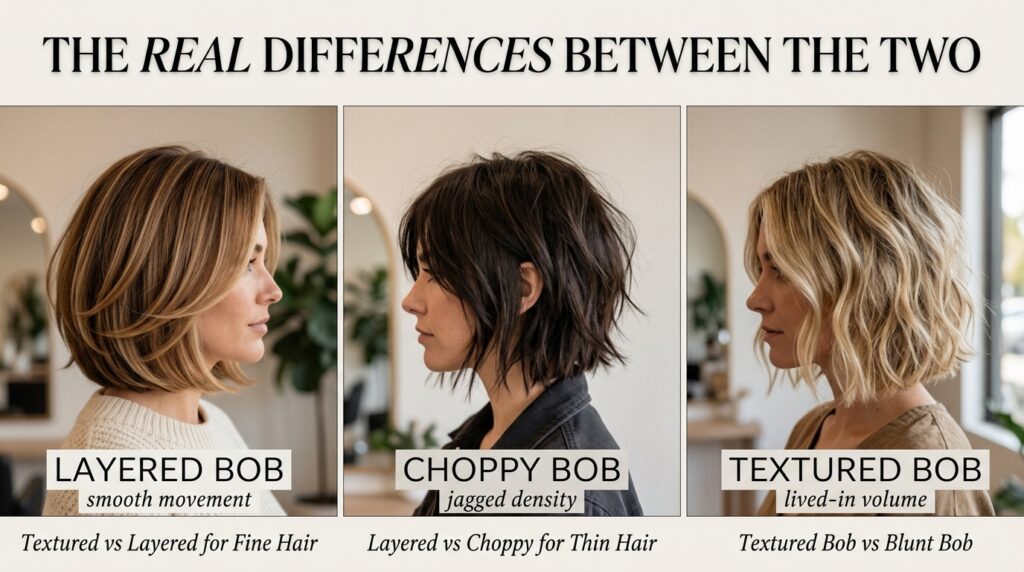
At a quick glance, the two bobs share the same length range. The real gap is in the finish, the feel, and the way each one moves. Layers focus on flow. Choppy cuts focus on texture.
A layered bob is about blending. A choppy bob is about breaking things up. One is soft and smooth. The other is edgy and raw. Your hair type, lifestyle, and personal style should guide the choice.
Here is a side-by-side look:
| Feature | Layered Bob | Choppy Bob |
| Overall feel | Soft, smooth, polished | Edgy, messy, bold |
| Ends | Blended and tapered | Jagged and uneven |
| Cutting tool | Scissors, sometimes thinning shears | Razor, point cutting, slicing |
| Movement | Flowing and bouncy | Piecey and tousled |
| Best for | Straight and thick hair | Fine, wavy, and curly hair |
| Styling effort | Low to medium | Low, but needs texture product |
| Vibe | Classic and refined | Trendy and playful |
The table gives you the big picture. Now let us look at the terms people often mix up, because the word “textured” shows up a lot in salons.
Textured bob vs layered bob
A textured bob is a bob cut to look rough, airy, and full of grit. Texture is the goal. A layered bob is a bob cut to have shape and flow. Layers are the method.
The two can overlap. Many textured bobs use layers inside to create the airy feel. But a layered bob does not always look textured. It can be smooth and sleek instead.
Here is a simple way to remember it. A layered bob asks, “How should the hair move?” A textured bob asks, “How should the hair feel and look up close?” Textured cuts show more separation. Layered cuts show more blending.
If you like a neat finish, go layered. If you like a messy, undone finish, go textured.
Textured bob vs layered bob for fine hair
Fine hair needs help looking full. A textured bob is often the better pick here. The broken-up ends make hair look thicker. The extra texture also gives your strands something to hold on to, so the style lasts longer.
Layers can still work for fine hair, but you must be careful. Too many layers can make thin hair look stringy and see-through at the ends. Keep the layers soft and few. Ask for them mostly around the face and crown.
For fine hair, a few smart rules help:
- Choose a blunt base with light texture on the ends
- Avoid heavy thinning shears
- Keep the length near the chin to hold weight
- Use volume mousse at the roots
A textured bob with a dense base is often the sweet spot. It gives fullness without losing shape.
Layered bob vs choppy bob for thin hair
Thin hair and fine hair are not the same thing. Fine hair means each strand is narrow. Thin hair means you have fewer strands overall. Both can look flat, but thin hair can also show the scalp.
For thin hair, a choppy bob usually wins. The jagged ends create the look of density. The choppy pieces overlap and cover gaps. This makes the whole cut feel fuller.
A layered bob can work if the layers are subtle and placed well. Long, heavy layers can pull thin hair down and expose the thin spots. Short, light layers near the crown can add lift.
If you have thin hair, talk with your stylist about where your hair is thinnest. A good cut should hide that area, not highlight it. Bangs can also help add visual weight up front.
Textured bob haircut with layers
You can have both worlds. A textured bob haircut with layers blends soft shape with a lived-in finish. It is one of the most flexible styles in 2026.
In this cut, the stylist adds layers to build movement. Then they add texture with a razor or point cutting on the ends. The result looks soft but not too neat. It is perfect for people who want something in the middle.
This hybrid works well because it fits many hair types:
- Fine hair: Layers stay light, and texture adds fullness
- Thick hair: Layers remove bulk, and texture breaks up weight
- Wavy hair: Layers support the natural wave pattern
- Straight hair: Texture stops the cut from looking flat
If you cannot decide between a layered and a choppy bob, this is a safe and stylish compromise.
Layered bob vs choppy bob for older ladies
Many women over 50 want a cut that looks fresh, easy, and flattering. Both bobs can work. The right choice depends on your hair’s thickness and how much time you want to spend styling.
A layered bob is a safe and elegant option. It adds soft volume, which helps hair that has become thinner with age. The smooth finish also looks polished. It is easy to style with a quick blow dry.
A choppy bob can look modern and youthful. It is great for women who want a bolder look. The texture adds body and hides thinning. Just make sure the cut is soft rather than harsh. Very jagged ends can look severe on mature hair.
Some helpful tips for women over 50:
- Pick a chin length or slightly longer cut
- Add soft face-framing pieces
- Use a gentle gloss or shine treatment
- Keep the nape neat for a clean outline
Textured bob with bangs
A textured bob with bangs is one of the biggest looks right now. Bangs add personality. They frame the eyes and draw attention to the face. Paired with a textured bob, they create a cool, effortless look.
You have several bang options:
- Curtain bangs: Soft and parted in the middle, good for most faces
- Wispy bangs: Light and see-through, good for fine hair
- Blunt bangs: Bold and graphic, best for thick, straight hair
- Side-swept bangs: Easy to blend, good for round and square faces
Bangs do need upkeep. They get oily quickly and grow out fast. You may need a quick trim every four to six weeks. Still, many people feel the style is worth it.
Textured bob vs layered bob for older ladies
For mature hair, both options have strengths. A textured bob adds grit and body. It is a smart pick if your hair has gone fine or lost its bounce. A layered bob adds softness and shape. It is a smart pick if you like a classic, ladylike look.
Hair often changes with age. It can get drier, thinner, or more wiry. A textured bob can disguise these changes by adding movement. A layered bob can soften the face by framing it gently.
If you want a quick rule, choose textured when you want volume and a modern feel. Choose layered when you want grace and an easy routine. Either way, regular trims and good moisture care will keep the cut looking sharp.
Textured bob vs blunt bob
A blunt bob has one length and a hard, straight edge. There are no layers and no texture. It looks sleek, strong, and sharp. It works best on thick, straight hair.
A textured bob is the opposite. It has soft, broken ends and a lot of movement. It feels relaxed and airy. The edge is not a clean line. It is a rough, playful one.
Here is how they compare:
| Feature | Blunt Bob | Textured Bob |
| Edge | Sharp, straight line | Soft, broken ends |
| Look | Sleek and graphic | Airy and tousled |
| Styling | Needs smooth finish | Needs texture product |
| Best hair | Thick, straight | Fine, wavy, mixed |
| Upkeep | Frequent trims to stay sharp | Grows out gently |
A blunt bob can make fine hair look thicker at the ends. But it can also look heavy and flat. A textured bob adds life. If you want sleek and bold, go blunt. If you want soft and breezy, go textured.
Which Bob Suits Your Hair Type

Your hair type matters more than any trend. A great cut on the wrong hair can feel like a daily fight. A good match, on the other hand, nearly styles itself.
Think about three things before you book. First, how thick are your strands? Second, how many strands do you have? Third, is your hair straight, wavy, or curly? Your answers will point to the best bob.
Read More: Cut a Mullet in Easy Steps
Here is a quick guide:
| Hair Type | Best Bob | Why |
| Fine | Choppy | Adds fullness and grip |
| Thick | Either | Choppy removes bulk, layered adds shape |
| Straight | Layered | Shows off smooth movement |
| Wavy | Choppy | Highlights natural bends |
| Curly | Choppy | Controls shape and bulk |
Fine Hair Usually Does Better with a Choppy Bob
Fine hair tends to lie flat. It can also look limp by midday. A choppy bob helps fix this. The short, uneven pieces stack up and create the look of volume.
The texture also gives fine strands more grip. When hair is too smooth, it slides and falls flat. When it has texture, it holds shape better. A light texture spray can keep the style going all day.
A few tips for fine hair:
- Keep the cut near the chin or just above the shoulders
- Avoid very long layers, which can look thin
- Ask for a dense, strong base
- Use a lightweight mousse, not a heavy cream
If you still love the layered look, go for short, soft layers. Just do not overdo it.
Thick Hair Works with Either, Depending on the Goal
Thick hair is lucky. It can handle almost any bob. The choice depends on what you want from the cut.
If your hair feels heavy and bulky, layers can help. They remove weight and let the hair move. A layered bob can turn a thick, puffy shape into a smooth, bouncy one.
If you want an edge, a choppy bob will also work. The razor work breaks up the bulk and adds a lived-in feel. It can make thick hair look lighter and cooler.
Ask yourself what bothers you most. If it is weight, choose layers. If it is boring, choose chop. If you want a sleek look, a blunt bob with a few inner layers may be the best fit.
Straight Hair Shows Off a Layered Bob
Straight hair is a great canvas for layers. Every cut line shows clearly. The soft steps between lengths create a smooth, flowing shape that looks expensive.
Since straight hair does not hide mistakes, a skilled stylist is key. The layers must be blended well. Otherwise, you may see choppy gaps where you do not want them.
A layered bob on straight hair is also easy to style. A quick blow dry with a round brush gives a gentle curve at the ends. A flat iron gives a sleek finish. You can also flip the ends out for a retro touch.
Choppy cuts can work on straight hair too. But they often need more styling products to keep the texture visible. Without it, the ends may look flat rather than piecey.
Wavy and Curly Hair Loves a Choppy Bob
Wavy and curly hair already has a natural texture. A choppy bob works with that, not against it. The uneven ends match the natural bends and spirals. The result looks effortless and balanced.
Choppy cuts also help control shape. Curly hair can turn into a triangle if it is cut in one flat line. Piecey layers spread weight more evenly, so the shape looks round and soft.
Tips for wavy and curly hair:
- Ask for a dry cut or a curl-friendly cut
- Avoid thinning shears, which can cause frizz
- Use a curl cream or a light gel
- Air dry or use a diffuser
A layered bob can work on waves and curls too. But layers must be cut with care. Too many can create a puffy, uneven shape. A stylist who knows curls is worth the extra cost.
Which Bob Suits Your Face Shape

Face shape also plays a role. The right bob can balance your features and bring out your best angles. The wrong one can make certain areas look wider or longer.
You do not need to follow strict rules. These are guides, not laws. Still, they help you start a smart conversation with your stylist.
Look in the mirror and pull your hair back. Check where your face is widest. Check the shape of your jaw. Then use the tips below.
Round Faces Suit a Choppy Bob
Round faces are soft and full, with a wide cheek area. The goal is to add length and angles. A choppy bob does this well. The uneven ends draw the eye downward and create lines that look sharper.
Go for a chin length or slightly longer cut. Keep the sides a bit longer than the back. Add side-swept bangs or long face-framing pieces. These break up the roundness.
Avoid very short bobs that end at the widest part of your cheeks. Also avoid heavy, rounded layers at the jaw. They can add width where you do not want it.
Square Faces Suit a Layered Bob
Square faces have a strong jaw and a wide forehead. The aim is to soften those angles. A layered bob does this beautifully. The soft, flowing layers add curves and take the edge off a hard jawline.
Ask for layers that start around the cheekbones and fall past the chin. Add side-swept bangs or curtain bangs. These draw attention to the eyes and soften the forehead.
Avoid blunt cuts that end exactly at the jaw. They can make the face look boxy. Also avoid heavy, straight bangs that cut across a wide forehead.
Oval Faces Suit Both
Oval faces are balanced. The forehead and jaw are close in width, and the cheekbones are slightly wider. Most cuts look good on this shape.
You can pick based on mood. Want a soft, polished look? Choose a layered bob. Want edge and attitude? Choose a choppy bob. Both will suit you.
Oval faces can also handle bangs of any kind. This gives you room to play. Try curtain bangs, blunt bangs, or wispy bangs. See what you enjoy most.
What to Tell Your Stylist

A great haircut starts with a clear chat. Many bad cuts happen because the client and stylist have different ideas. Words like “choppy” or “layered” mean different things to different people.
The best fix is to bring photos. Show two or three pictures of the cut you want. Also show one or two pictures of what you do not want. This helps your stylist see your taste right away.
Here is a simple script you can use:
- “I want a bob that ends at my chin. I like soft, blended layers.”
- “I want a choppy look with texture at the ends, but not too jagged.”
- “My hair is fine, so I need the cut to look full.”
- “I only want to spend ten minutes styling each day.”
Also share some key details about your hair and life:
| Topic | What to Tell Your Stylist |
| Hair type | Fine, thick, straight, wavy, or curly |
| Daily routine | How long you spend styling |
| Tools you use | Blow dryer, flat iron, or air dry only |
| Cowlicks | Where they sit and how they act |
| Color or damage | Any past bleach or heat damage |
| Trim schedule | How often you can visit the salon |
Ask a few questions too. Ask how the cut will grow out. Ask which products you should use. Ask how often you will need a trim. A good stylist will happily answer.
Finally, be honest about your skill level. If you cannot style your hair with a round brush, say so. Your stylist can adjust the cut so it works with your habits.
Maintenance and Styling Compared
Both cuts look good on day one. The real test is how they hold up on day thirty. Let us compare upkeep, styling, and product needs.
A layered bob is usually a bit easier to maintain. The soft shape grows out slowly. You can stretch trims to every eight to ten weeks. It looks neat even when it is a little long.
A choppy bob needs more frequent trims. The sharp texture can lose shape fast. Plan a visit every six to eight weeks. In return, the cut forgives messy styling. It looks good even when it is a bit rumpled.
| Category | Layered Bob | Choppy Bob |
| Trim schedule | Every 8 to 10 weeks | Every 6 to 8 weeks |
| Daily styling time | 10 to 15 minutes | 5 to 10 minutes |
| Main tools | Blow dryer, round brush, flat iron | Fingers, texture spray, dry shampoo |
| Best products | Smoothing serum, heat protectant | Sea salt spray, paste, texture powder |
| Look when messy | Can look frizzy | Looks purposely tousled |
| Grow-out stage | Graceful | Can look uneven |
Here are quick styling tips for each cut.
For a layered bob:
- Apply heat protectant on damp hair
- Blow dry with a round brush for bounce
- Curl the ends under or flip them out
- Finish with a light shine serum
For a choppy bob:
- Spray sea salt spray on damp hair
- Scrunch or air dry for natural texture
- Rub a small amount of paste between your palms
- Twist pieces at the ends for definition
Healthy hair is key for both. Use a gentle shampoo and a good conditioner. Add a deep mask once a week. Use heat tools on a medium setting. Dry, frayed ends will ruin even the best cut.
Finally, think about your lifestyle. If you like a quick, grab-and-go routine, choppy is easier day to day. If you enjoy a polished look and do not mind a blow dry, layered is a lovely pick.
Frequently Asked Questions
What is the main difference between a layered bob and a choppy bob?
A layered bob has smooth, blended layers that create soft movement. A choppy bob has jagged, uneven ends that create bold texture and a messy, lived-in look.
Which bob is better for fine hair?
A choppy bob is usually better for fine hair. The short, uneven pieces add fullness and help thin strands look thicker and hold their shape longer.
Is a choppy bob good for women over 50?
Yes, a choppy bob can work well for women over 50 when the texture is soft. It adds body to thinner hair and gives a modern, fresh look.
How often should I trim a choppy bob?
Trim a choppy bob every six to eight weeks. Regular trims keep the ends sharp and stop the texture from looking uneven or worn out.
Can I get a bob that is both layered and textured?
Yes, many stylists offer a textured bob with layers. It mixes soft shape with piecey ends, so it suits fine, thick, wavy, and straight hair.
Final Thoughts
Layered and choppy bobs are both great cuts in 2026. The layered bob is soft, smooth, and elegant. The choppy bob is bold, airy, and full of attitude. Neither one is better. They simply fit different hair types, faces, and personalities.
Pick the cut that matches your hair and your daily routine. Bring photos to your stylist and speak clearly about what you want. If you are still unsure, a textured bob with soft layers gives you the best of both worlds.

Jasper Cole is a content writer and researcher at Faxhion Infoz, focusing on hair care, hairstyles, styling ideas, and hair related topics. He researches information from reliable sources and presents practical insights in simple language. His goal is to help readers better understand hair care and make informed everyday choices.