


Freeform locs are the most relaxed way to wear locs. You let your hair form its own shape. No set parts. No strict grid. No rules about size. Your hair does the work, and you step back and watch it grow into something unique.
In 2026, more people in the USA are choosing free form locs because they want low-stress hair. Some want a natural look. Others want a style that feels honest and personal. This guide covers 26 freeform styles, from the first budding weeks to long, mature locs. You will also learn what freeform hair is, how to start it, and when it may not be the right fit.
Whether you want freeform locs for Black men, freeform dread styles for ladies, or a semi freeform locs look, you will find an idea here that fits your hair and your lifestyle.
Starting and Early-Stage Freeform Dreads
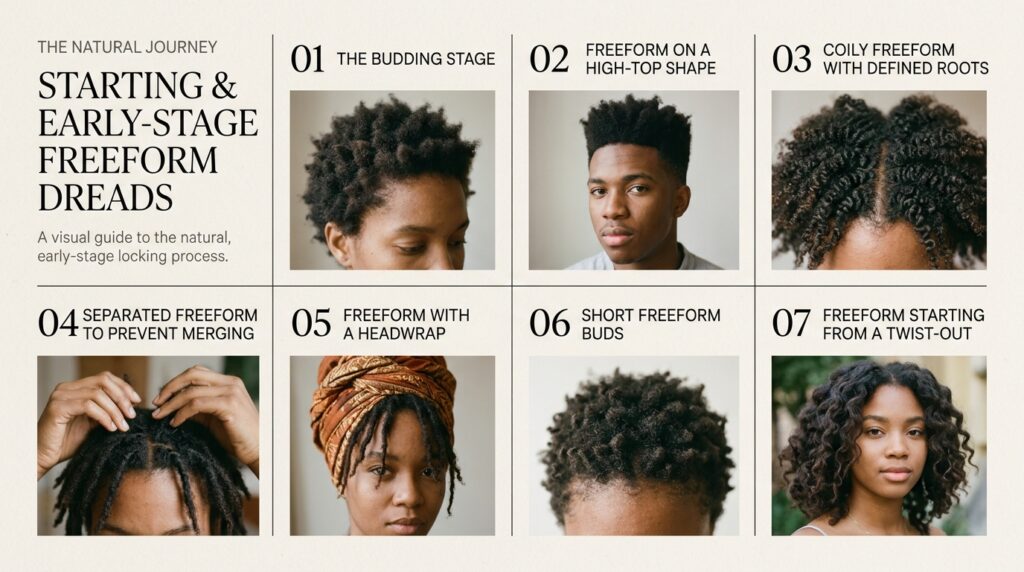
The early stage is the most important part of the journey. Your hair is learning how to lock. It can look messy, fuzzy, and uneven. That is normal. This is the phase where patience pays off.
Most people see real locking between month three and month eight. Hair type, wash habits, and daily activity all play a part. Below are seven starter looks that make this stage feel easier.
| Stage | What to Expect | Typical Timeline |
| Budding | Small knots and tight coils | Months 1 to 3 |
| Teen phase | Frizz, loose bits, uneven shapes | Months 4 to 9 |
| Maturing | Firmer locs with a clear pattern | Year 1 to 2 |
1. The Budding Stage
The budding stage is when small knots form along each section. Your scalp may feel bumpy. Your hair may look like tiny pearls or cotton buds. It is a sweet, simple start.
Keep your hands off as much as possible. Do not pull the buds apart. Let them settle. Wash gently and rinse well so no residue builds up inside.
This look works for all genders and all lengths. It is also a great base for later styles, such as fades and loc buns.
2. Freeform on a High-Top Shape
A high-top shape gives early freeform locs some height and attitude. You keep the top longer and the sides shorter. As the buds form, the top gains volume and texture.
This style is popular with freeform locs for Black men. It looks bold without much effort. It also keeps the hair off your neck in warm weather.
Trim the sides every two to three weeks. Leave the top alone so it can lock at its own pace.
3. Coily Freeform with Defined Roots
Some people begin with natural coils and let them lock from there. The roots stay neat and defined while the ends stay soft and curly. It gives a clean look at the scalp and a wild look at the tips.
This works well for 4A to 4C hair. The coil pattern helps the hair grab itself and form locs. You do not need to twist every strand. A little separation at the root is enough.
Use a light oil or water-based spray. Heavy butters can build up and slow the locking process.
4. Separated Freeform to Prevent Merging
One common worry with freeform is merging. This is when two locs grow into one big loc. Some people love that look. Others do not.
To prevent it, gently pull the roots apart after washing. Do this when your hair is damp and soft. Use your fingers, not a comb. Keep each loc roughly the same distance apart.
This is called semi freeform locs. You get natural shapes with a little guidance. It is a smart middle path for new locs.
5. Freeform with a Headwrap
A headwrap is a practical friend in the early stage. It covers frizz, holds loose hair in place, and protects your locs from lint and dust. It also looks great.
Choose silk or satin, or a cotton wrap with a silk lining. Plain cotton can dry out your hair and snag the buds. Wrap it loose so your scalp can breathe.
Many freeform dreads styles for ladies use bold prints and bright colors with this look. It turns the awkward phase into a fashion moment.
6. Short Freeform Buds
Short freeform buds suit anyone who wants the lowest-effort start. The hair sits close to the head. The knots are small and neat. It looks tidy even when you do nothing.
This is a top pick for freeform locs male short hair searches. It works well for busy workers, students, and athletes. You can wash it often and dry it fast.
As the hair grows, the buds will stretch into short locs. You can keep a light shape-up around the edges if you like a sharper finish.
7. Freeform Starting from a Twist-Out
Some people start their locs from a twist-out. You twist your hair, let it dry, and unravel it for a soft, defined texture. Over time, the pieces begin to knot into locs.
This is a gentle path. It gives you stretch and shine early on. It also helps you see your natural curl pattern before the hair locks.
Skip heavy products. Wash every one to two weeks. The twist-out look will slowly turn into freeform locs without any harsh steps.
Freeform Dreads with Fades and Cuts
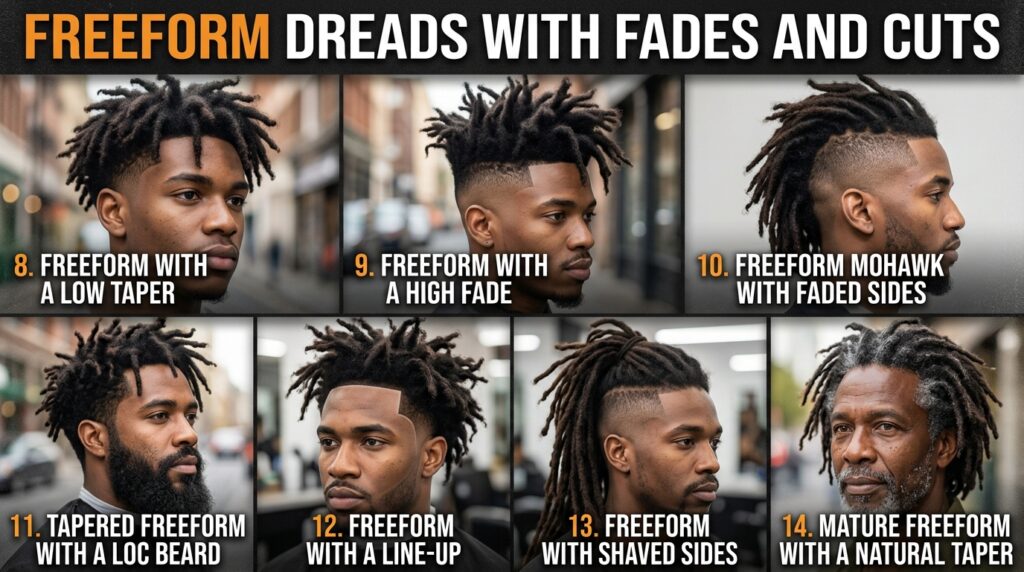
Freeform does not mean messy edges. A clean cut makes natural locs look sharp and planned. Fades and tapers are very popular with men in the USA, but women also wear them with confidence.
The key is balance. Wild locs on top and crisp edges on the sides create strong contrast. Here are seven cuts that work well.
| Cut | Best For | Maintenance |
| Low taper | Work and daily wear | Every 2 to 3 weeks |
| High fade | Bold, modern look | Every 1 to 2 weeks |
| Mohawk fade | Statement style | Every 2 weeks |
| Line-up | Sharp edges | Every 1 to 2 weeks |
8. Freeform with a Low Taper
A low taper is subtle. The hair gets shorter just above the ears and at the neckline. It frames the face and keeps the locs looking neat.
This is one of the safest choices for office jobs and school. It says “natural” and “put together” at the same time. It also grows out gracefully.
Ask your barber to leave the top untouched. Cutting the locs themselves can cause uneven shapes.
Read More: Layered Bob vs Choppy Bob
9. Freeform with a High Fade
A high fade lifts the cut higher on the head. The sides are very short, often down to the skin. The locs sit on top like a crown.
This look is strong and modern. It makes the locs stand out. It is a favorite among younger guys and anyone who likes a clean, fresh contrast.
Plan for regular barber visits. A high fade loses its sharpness fast. Two weeks is a good rhythm.
10. Freeform Mohawk with Faded Sides
A mohawk puts all the attention on the center strip. The sides are faded or shaved. The middle holds your freeform locs, which can stand up, fall to one side, or lie back.
It is bold and playful. It also shows off your locs’ natural shapes. Thick, thin, curved, and straight locs all look good in a mohawk.
Wear it up for height or pull it into a loose twist for a calm look. Both versions feel creative.
11. Tapered Freeform with a Loc Beard
A loc beard is a beard that forms locs, just like the hair on your head. Pair it with a tapered cut and your whole look feels connected.
This style takes time and patience. Beard hair is coarse and locks slowly. Start by keeping the beard clean and moisturized. Do not trim it too often while it forms.
It is a rich, rugged look and fits freeform locs for Black men very well.
12. Freeform with a Line-Up
A line-up sharpens the hairline, temples, and edges. It is a thin, crisp border that makes any style look finished.
On freeform locs, it creates a smart frame around the face. It works on men and women. Many women choose a soft line-up around the temples and nape.
Ask your barber to go light near the hairline. Too much cutting can thin the edges over time.
13. Freeform with Shaved Sides
Shaved sides give a clean, edgy shape. The locs sit on top and fall naturally. It is simple, light, and easy to wash.
This look is good for hot climates, such as Texas, Florida, and Arizona. Less hair on the sides means less heat and less drying time.
You can also shave a small design into the sides if you want more personality. Keep the lines simple so the locs stay the star.
14. Mature Freeform with a Natural Taper
Mature locs are thick, firm, and full of character. A natural taper keeps the sides slightly shorter but not shaved. The shape blends softly into the longer locs on top.
This is a timeless style. It looks great on older men and women, and on anyone who wants a dignified, relaxed feel.
Because the locs are mature, they hold their shape well. You will need very little styling. A fresh wash and a clean neckline are often enough.
Styling Mature Freeform Dreads

Once your locs are strong, you have more freedom to style them. Mature freeform locs can handle buns, ponytails, wraps, and accessories. The uneven shapes add charm to every style.
Do not pull too tight. Heavy locs put stress on the roots. Use soft ties and change the position often.
| Style | Difficulty | Time Needed |
| High bun | Easy | 2 minutes |
| Half-up | Easy | 3 minutes |
| Cuffs and beads | Easy | 10 minutes |
| Ponytail | Easy | 2 minutes |
| Headband | Very easy | 1 minute |
15. High Freeform Loc Bun
A high bun is the classic. Gather your locs at the crown, twist them once, and wrap them into a bun. Secure it with a soft band or a loc tie.
It keeps hair off your neck and face. It also works for the gym, the beach, and formal events. Add a decorative pin for extra style.
Avoid wearing the same bun position every day. This can cause tension at one spot on the scalp.
16. Half-Up Freeform Style
The half-up look pulls the top section up and leaves the rest hanging. It gives you the best of both worlds. You get length and movement, plus a tidy face.
It is a popular choice among semi freeform locs female wearers. The loose locs frame the shoulders while the top stays neat.
Use a scrunchie or a loc tie. A small clip works too. The style takes less than three minutes.
17. Freeform Locs with Cuffs and Beads
Cuffs and beads add a touch of art. Slide a metal cuff or a wooden bead onto a few locs. You can place them near the ends or in the middle.
Choose sizes that fit your loc width. A cuff that is too tight can damage the hair. One that is too loose will fall off.
Gold, silver, copper, and natural wood all look good. Keep it simple. Three to six accents are usually enough.
18. Freeform Ponytail
A ponytail is the easiest everyday style. Pull your locs back at the nape or the crown. Tie them with a soft band. Done.
A low ponytail looks calm and professional. A high one looks sporty and fresh. Both let your locs swing naturally.
This style suits all ages and genders. Many freeform dread styles for ladies use a side ponytail for a softer, romantic look.
19. Pulled-Back Freeform with a Headband
A wide headband holds the front locs back without tying the whole head. It is quick, comfortable, and stylish.
Pick a soft fabric. Stretchy cotton, silk, or satin works best. Avoid tight elastic bands that dig into the forehead.
This look is great for running errands, workouts, or relaxed weekends. It also helps hide new growth at the hairline.
20. Freeform Locs Worn Loose and Long
Letting your locs hang is the purest freeform look. No ties. No styling. Just your hair as it is.
Long, loose locs move with you and show off every natural curve. They are heavy, so keep your scalp healthy and your roots strong.
Wash the locs regularly and dry them well. Damp, heavy locs can smell or grow mildew if left wet for long.
Freeform Loc Variations and Length

Freeform locs come in many sizes, colors, and lengths. No two heads look alike. This is part of the beauty. Some people grow them to the waist. Others keep them short and neat.
You can also add small changes, like color or extensions, without losing the freeform spirit.
| Variation | Look | Care Level |
| Waist-length | Dramatic and heavy | Medium |
| Colored ends | Playful and bright | Medium to high |
| Congo locs | Soft, fluffy, thick | Low |
| Thin locs | Light and delicate | Medium |
| Twisted front | Neat and framed | Low |
| Curly ends | Soft and playful | Low to medium |
21. Waist-Length Freeform Locs
Waist-length locs take years to grow. They show commitment and patience. They also look stunning, especially when they move in the wind.
Weight can pull on the scalp. Support the locs with a wrap or a bun now and then. Sleep with them tied up or in a silk bonnet.
Trim the very ends if they split. A small trim keeps the length healthy without losing much.
22. Freeform with Color on the Ends
Color on the tips adds fun and personality. Popular shades include honey blonde, copper, burgundy, and soft blue. The roots stay natural while the ends glow.
Use a colorist who knows locs. Bleach can weaken the hair if it is overused. Always do a strand test and keep your hair moisturized afterward.
If you do not want to dye, try temporary wraps or colorful thread on a few locs.
23. Freeform with Congo Locs
Congo locs are thick and fluffy, with a soft, cloud-like texture. The hair stays loose and wide. They look full and bold.
This style fits the freeform idea well. You do not control the shape too much. Let the hair bloom.
Use a gentle shampoo and rinse well. Fluffy locs trap lint easily, so a satin scarf at night helps a lot.
24. Thin Freeform Locs
Thin locs look light and elegant. They move easily and offer many styling choices. They also feel less heavy on the scalp.
Thin freeform locs form from smaller natural sections. They can be harder to maintain because they snap more easily if handled roughly.
Avoid tight styles. Wash gently and use a light oil. Thin locs love care and softness.
25. Freeform Locs with a Twisted Front
A twisted front gives the face a neat frame. You twist or coil the front locs while leaving the rest free. It balances order and wildness.
This is a smart option for work, school, or events. The front looks polished, while the back keeps the freeform charm.
You can also use this style to hide thin edges or new growth. It is simple, clean, and flattering.
26. Freeform Locs with Curly Ends
Curly ends are a soft, natural detail that many freeform wearers love. The locs stay firm near the root, then open into loose curls at the tips. It looks playful and full of life.
This happens on its own as hair grows. Some people keep the curls on purpose because they add movement and volume. Others prefer to trim them for a tighter finish. Both choices are valid.
Keep the ends moisturized with a light oil. Curly tips can dry out and snag easily. A silk scarf at night helps protect them. This style works well for men and women, and it looks great on both short and long locs.
How Freeform Dreads Differ from Traditional Locs

If you are asking, what is free form hair, the answer is simple. Freeform hair is hair that forms locs on its own, with little or no manipulation. You wash it, protect it, and wait. The hair twists and knots naturally into dreadlocks.
Traditional locs follow a pattern. A loctician makes neat parts, sizes each loc, and maintains it with regular retwists. The result is uniform and tidy. Freeform is the opposite. Each loc is its own shape.
Here is a quick comparison.
| Feature | Freeform Locs | Traditional Locs |
| Parting | None or loose | Neat grid |
| Loc size | Varies | Even |
| Retwisting | Rare or none | Every 4 to 8 weeks |
| Start time | Slow, natural | Quick, controlled |
| Cost | Low | Moderate to high |
| Look | Organic and unique | Clean and uniform |
Freestyle locs is another name people use for this look. Some say “freeform dreads” while others say “freestyle.” All point to the same relaxed approach.
There is also the middle option, semi freeform locs. You allow natural growth but lightly separate roots to avoid merging. Many men and women find this a comfortable balance.
Neither type is better. It depends on the look you want and the care you can give.
How to Start and Maintain Freeform Dreads

Starting freeform dreads is easy. You do not need special tools. You need clean hair, patience, and a plan to protect your scalp. The first few months test your mindset more than your hair.
Simple Steps to Begin
- Wash your hair with a residue-free shampoo.
- Let it air dry or dry it gently.
- Stop combing and brushing.
- Separate the roots lightly with your fingers if needed.
- Protect your hair at night with a satin bonnet or scarf.
- Wait. Let time do the work.
How to Get Freeform Dreads with a Sponge
Many people ask how to get freeform dreads with a sponge. A sponge brush can help start the first coils on short, coily hair. It is not truly freeform, but it is a popular starter method.
Here is how it works:
- Start with clean, damp hair.
- Use a curl sponge with small holes.
- Rub it in small circles on one section of hair.
- The hair will coil and form small knots.
- Work section by section across the head.
- After that, stop and let the hair mature on its own.
This works best on short 4A to 4C hair. It gives a quick coil pattern. After that, hands off. Do not keep using the sponge, or the style becomes manipulated instead of freeform.
Daily and Weekly Care
- Wash every one to two weeks.
- Rinse well to remove soap.
- Use light oils on the scalp.
- Avoid heavy waxes and creams.
- Dry fully after washing.
- Sleep in a satin bonnet.
- Do not pick at loose hair.
Keep your scalp clean and your hair dry. This stops odor and buildup. Over time, your locs will become firm and strong.
When Freeform Dreads Are Not the Right Choice

Freeform is beautiful, but it is not for everyone. Some people need a neater look for work or religion. Others dislike uneven shapes or fuzzy texture. It helps to know this before you start.
Here are common reasons freeform may not fit:
- You want a very neat, uniform look. Freeform is naturally uneven.
- You are not patient. The locking process can take a year or more.
- Your hair is very straight or fine. It may not lock well without help.
- You work in a strict dress code. Some workplaces prefer a polished style.
- You dislike frizz. Early stages can look fuzzy.
- You want to change styles often. Locs are hard to undo.
If you love the idea but want more control, try semi freeform or traditional locs. A good loctician can guide you. You can also begin with short twists or coils and decide later.
Think about your lifestyle too. Locs are a long commitment. They need time, care, and an open mind.
Frequently Asked Questions
What are freeform locs?
Freeform locs are dreadlocks that form naturally with little or no twisting, parting, or retwisting. The hair knots on its own over time.
How long do freeform dreads take to form?
Most people see real locking between 3 and 8 months. Full maturity can take 1 to 2 years, depending on hair type and care.
Can men and women both wear freeform dreads?
Yes. Freeform dreads suit all genders and most curly or coily hair types. Styles like fades, buns, and ponytails work well for everyone.
Do freeform locs need retwisting?
No. Freeform locs do not need regular retwisting. Some people lightly separate the roots to stop locs from merging.
How often should I wash freeform dreads?
Wash every one to two weeks with a residue-free shampoo. Rinse well and dry fully to avoid buildup and odor.
Final Thoughts
Freeform dreads are about freedom. They let your hair lead the way and show your natural texture in its truest form. From small buds to waist-length locs, each stage has its own beauty. With the right cut, simple styling, and steady care, freeform locs look fresh at any length.
The best advice is to stay patient and keep it simple. Wash gently, protect your hair, and enjoy the journey. Whether you choose a fade, a bun, or loose, long locs, your hair will tell its own story.

Jasper Cole is a content writer and researcher at Faxhion Infoz, focusing on hair care, hairstyles, styling ideas, and hair related topics. He researches information from reliable sources and presents practical insights in simple language. His goal is to help readers better understand hair care and make informed everyday choices.