

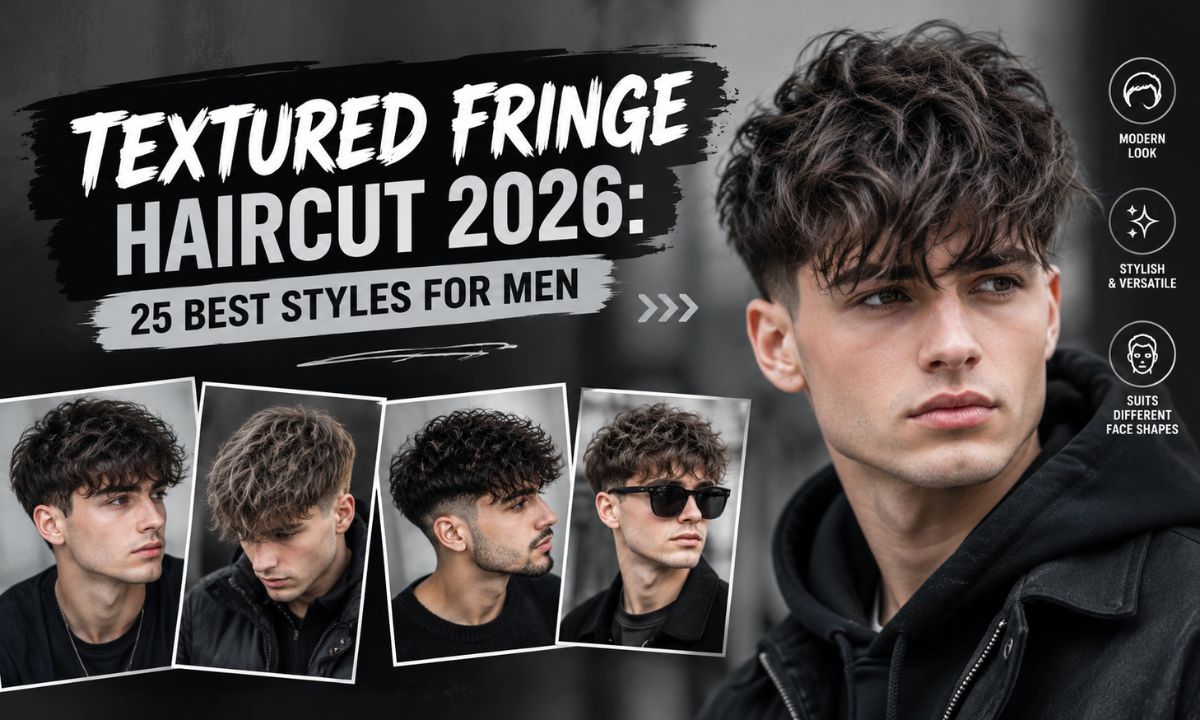
The textured fringe is one of the most popular men’s cuts in the USA right now. It looks sharp. It looks relaxed. It also works for almost every hair type. If you want a cut that feels modern without taking an hour to style, this is a strong pick.
This guide covers everything. You will learn what the cut is, how it differs from a regular fringe, and which styles are trending in 2026. You will also get barber scripts, styling steps, and a clear look at upkeep and cost.
What Is a Textured Fringe Haircut?
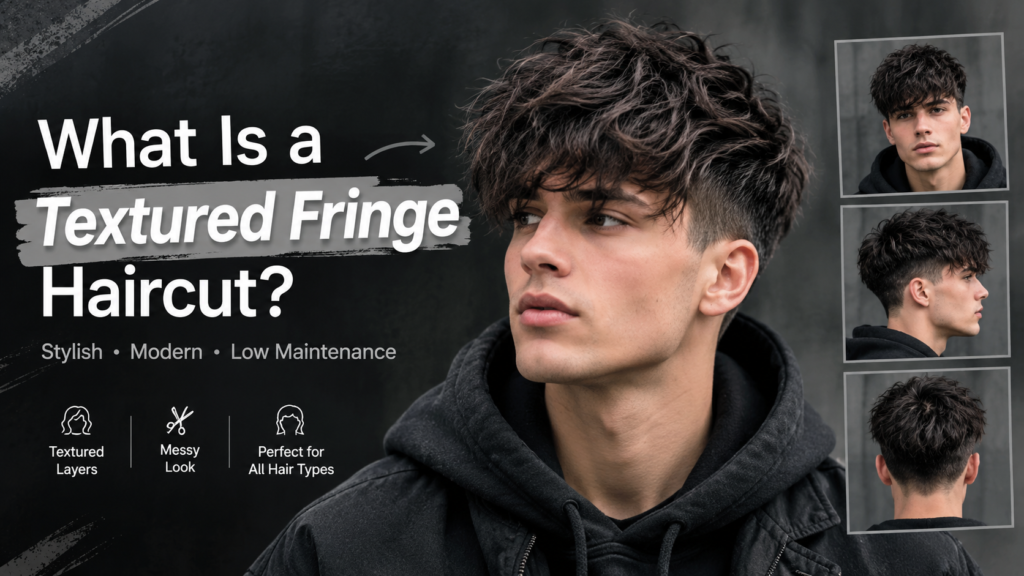
A textured fringe is a cut with longer hair on top, brushed forward over the forehead. The ends are chopped into small, uneven pieces. This breaks up the hairline and gives a soft, lived-in finish. The sides are usually short, often with a taper or fade.
The key word is “textured.” The front is not one flat, straight line. It has movement and gaps. That is why it looks natural and a little messy in a good way.
Most men choose it because it is easy. A bit of product and a few minutes is all it takes. It also grows out well, so you do not need a trim every two weeks.
Textured Fringe Haircut Black Male
On Black hair, the textured fringe works best on coils, waves, or twists. The top can be shaped with a sponge, a comb, or a quick finger twist. A crisp fade on the sides makes the top pop. Moisture is important, so use a light leave-in cream.
Textured Fringe Low Taper
The low taper is the most classic pairing. The hair thins out just above the ears and neckline. It looks clean and works in an office. It is also a safe first step if you have never had a fade.
Textured Fringe Haircut Men
For most men, the cut is simple. Keep 2 to 4 inches on top. Keep the sides short. Point-cut the front. This formula works for students, creatives, and professionals alike.
Textured Fringe Haircut Straight Hair
Straight hair can look flat. Texture fixes that. Point-cutting and a light clay add the grit that straight strands lack. The result looks full and separated instead of limp.
Textured Fringe Haircut Mid Fade
A mid fade starts higher on the head than a low taper. It gives a bolder contrast between the sides and the top. It suits men who want a sharper, more modern look.
Textured Fringe Haircut Medium Length
Medium length means about 3 to 5 inches on top. This is the sweet spot for styling. You can push it forward, sweep it sideways, or tousle it up. It also hides a high forehead well.
Textured Fringe vs. Regular Fringe: The Actual Difference

A regular fringe is cut in one clean line across the forehead. It looks neat and even. It can also look stiff, especially on thick or straight hair.
A textured fringe is cut with broken, uneven ends. It looks softer and more casual. The hair separates into small pieces instead of sitting like a curtain.
| Feature | Regular Fringe | Textured Fringe |
| Cut line | Straight and blunt | Broken and uneven |
| Look | Neat and formal | Relaxed and modern |
| Styling time | Short but strict | Short and forgiving |
| Grow-out | Looks messy fast | Grows out gracefully |
| Best product | Light pomade | Clay, paste, or sea salt spray |
If you like a polished, school-photo look, go regular. If you want something with attitude, go textured.
Read More: 40 Best Boys’ Haircuts for Straight Hair (2026)
The Broccoli Cut to Modern Textured Fringe: How It Evolved
The broccoli cut took off in the late 2010s. It was a short, rounded mop of hair with a heavy top. Many people loved it. Many also said it looked like a bowl of greens on someone’s head.
The cut had a flaw. The top was often too bulky and too even. Barbers began thinning it out and adding texture. They also tightened the sides with tapers and fades.
Over time, the broccoli cut became lighter, sharper, and easier to wear. That is the textured fringe we see today. It keeps the forward-brushed shape but drops the bulk. In 2026, it is a staple on barbershop menus across the country.
What Is Point-Cutting and Why It Makes All the Difference
Point-cutting is a barber technique. The barber holds the scissors pointing up and snips into the ends of the hair. This creates small, uneven tips instead of a flat edge.
Those uneven tips are what make the fringe look soft. Without point-cutting, the front is heavy and blunt. With it, the hair breaks apart and moves naturally.
It is a small detail that changes the whole cut. A good barber will always use it on a textured fringe.
20 Textured Fringe Styles for 2026

Here are the top styles to show your barber this year. Pick the one that matches your hair, your lifestyle, and your comfort level.
Classic Textured Fringe with Low Taper
A timeless pick. The sides taper gently, and the top has soft, broken ends. It looks good everywhere, from work to the weekend.
Mid-Fade Textured Fringe
The fade starts around the temple. The contrast is stronger, and the top stands out more. It is a clean choice for men who like sharp lines.
High-Taper Textured Fringe
The taper climbs high above the ears. This gives a bold, athletic look. Pair it with a longer top for balance.
Textured Fringe on Straight Hair
Heavy point-cutting adds volume and grip. Use matte clay to keep the strands from falling flat.
Curly Textured Fringe
Let the curls fall forward over the forehead. Trim only the shape, not the curl pattern. A light curl cream keeps frizz down.
Low-Fade Textured Fringe
The fade stays close to the ears and neckline. It is subtle and easy to grow out. A solid starter fades.
Messy Fringe with Mid-Taper
This one is built to look undone. Rough up the top with paste and skip the comb. The mid taper keeps the sides tidy.
Textured Fringe Short
Keep the top around 2 inches. It is quick to style and good for hot summers. It also works well for men with strong hairlines.
Wavy Textured Fringe
Waves add natural movement. Let the hair air-dry and add sea salt spray. The fringe will sit in loose, soft pieces.
Textured Fringe with Undercut
The sides are cut very short and disconnected from the top. The contrast is dramatic. Ask for a clean line where the top begins.
Burst Fade Textured Fringe
The fade curves around the ear and fades out toward the back. It frames the fringe nicely. Popular on curly and coily hair.
Textured Fringe Blowout
Blow-dry the fringe forward with a vent brush. This builds volume at the front. Finish with a light-hold spray.
Long Textured Fringe
The fringe reaches the eyebrows or even the eyes. It has a moody, artistic feel. It needs more care and regular trims.
Side-Swept Textured Fringe
Sweep the fringe to one side with a comb or fingers. It opens the forehead a little. Good for those who dislike hair in the face.
French Crop with Textured Fringe
A short, forward fringe cut just above the brows. It is neat, low-effort, and very popular. It also hides a receding hairline well.
Textured Fringe with Beard
A fringe and a trimmed beard balance each other. Keep the beard neat so the whole look stays sharp. A faded beard line blends best with a taper.
Fluffy Textured Fringe
Use a blow-dryer and a light mousse. The result is airy and full. It looks soft and youthful.
Spiky Textured Fringe
Push the front up and forward with strong-hold clay. The tips stand in small points. It is a playful look that suits short hair.
Textured Fringe for Boys and Teens
Keep it simple. A low taper and a light fringe are enough. Choose a cut that is easy for a teen to style alone.
Conservative Textured Fringe
The fringe sits shorter and the texture is subtle. It passes most dress codes. It is a smart choice for formal workplaces.
What Is Point-Cutting? The Technique Behind Every Great Textured Fringe

Point-cutting is the reason a textured fringe looks right. The barber cuts into the hair at an angle instead of across it. Each snip removes a tiny bit of weight. The result is hair that lifts, separates, and moves.
It also helps with thick hair. It removes bulk without making the cut look thin. On fine hair, a lighter touch keeps the fringe from looking sparse.
Not every barber does it well. Ask to see their work or check their photos before you book.
Blunt Cutting vs. Point-Cutting: The Visual Difference
Blunt cutting leaves a flat, straight edge. From the front, you see one solid line. It looks heavy and formal.
Point-cutting leaves a jagged, soft edge. From the front, you see small gaps and peaks. It looks lighter and more natural.
| Blunt Cutting | Point-Cutting | |
| Edge | Straight and solid | Broken and soft |
| Weight | Heavy | Light |
| Movement | Low | High |
| Best for | Formal bangs | Textured fringe |
What to Say to Your Barber About Point-Cutting
Keep it simple. Try this: “Please point-cut the fringe so it looks soft and broken, not blunt.” You can add: “I want texture at the front, but not too thin.”
If your barber seems unsure, show a photo. Photos remove most of the guesswork.
How Long Should the Fringe Actually Be?
The right length depends on your face and hair. A good rule is to stop at the eyebrows or just above. This looks balanced and keeps hair out of your eyes.
- Short (above the brow): easy and neat
- Medium (at the brow): the most flexible
- Long (below the brow): moody, but needs more care
If you are unsure, start shorter. You can always grow it out.
Textured Fringe by Hair Type: Which Version Works on You

Your hair type decides how the fringe sits. The cut should work with your natural pattern, not fight it. Here is what to expect.
Textured Fringe on Straight Hair
Straight hair shows every cut line. It needs strong point-cutting to avoid a flat look. Use clay or paste for grip. A sea salt spray helps create body.
Textured Fringe on Wavy Hair
Wavy hair is the easiest to style. The waves already give texture. Keep the length around 3 to 4 inches and let it dry naturally. A little cream controls the frizz.
Textured Fringe on Curly Hair
Curls need a bit more length so the fringe does not spring up too short. Cut dry if possible so the barber sees the real shape. Moisturize daily to keep curls defined.
Textured Fringe on Thick Hair
Thick hair can look bulky. Ask the barber to remove weight with point-cutting and thinning shears. Keep the sides tight. A strong-hold clay keeps the shape in check.
Textured Fringe for Fine Hair
Fine hair needs care. Too much texturizing can leave it looking thin. Ask for a lighter touch and a slightly longer fringe. Use a volumizing powder for lift.
Textured Fringe by Face Shape
Face shape can guide the length and style of your fringe. Use this table as a starting point.
| Face Shape | Best Fringe Style | Why It Works |
| Oval | Almost any version | Balanced shape suits all |
| Round | Side-swept, longer fringe | Adds length and angles |
| Square | Short to medium fringe | Softens strong jawlines |
| Oblong | Shorter, fuller fringe | Reduces face length |
| Heart | Medium fringe with low taper | Balances a wider forehead |
| Diamond | Fluffy or medium fringe | Softens cheekbones |
These are guides, not strict rules. A good barber will adjust the cut to fit your features.
Who Should NOT Get a Textured Fringe
A textured fringe is not right for everyone. Some people will be happier with another cut.
- Men with a very low hairline or a strong widow’s peak may find the fringe sits oddly.
- Men with very thin or patchy hair may not get enough volume.
- Men who want zero styling may get frustrated with the upkeep.
- Men with a strong cowlick at the front may fight the fringe every morning.
If any of these sound like you, talk to your barber first. They can suggest a variation or a better option.
How to Style a Textured Fringe at Home

Styling takes five minutes or less. The key is to use the right amount of product and to work it in gently.
Step-by-Step Guide
- Start with damp hair. Towel-dry until it is not dripping.
- Apply a pre-styler. Use sea salt spray or mousse for your body.
- Blow-dry forward. Point the dryer down and forward to lift the roots.
- Warm the product. Rub a pea-sized amount of clay or paste between your palms.
- Work it through. Push it through the fringe with your fingers, starting at the back.
- Shape the front. Pinch and twist small sections for texture.
- Lock it in. Finish with a light mist of hairspray if you need it.
Styling Per Hair Type
| Hair Type | Pre-Styler | Main Product | Finish |
| Straight | Sea salt spray | Matte clay | Light spray |
| Wavy | Curl cream | Paste | Air-dry |
| Curly | Leave-in conditioner | Curl cream or gel | Diffuse |
| Thick | Light mousse | Strong clay | Firm spray |
| Fine | Volumizing powder | Light paste | Soft spray |
Best Products for Textured Fringe
Choose the product by finish, not by brand. Here is what each type does.
- Matte clay: strong hold, no shine. Best for most hair types.
- Paste: medium hold, soft finish. Great for messy looks.
- Sea salt spray: adds grit and body. Good for fine or straight hair.
- Curl cream: keeps waves and curls soft and defined.
- Texture powder: adds lift at the roots without weight.
Start with a small amount. You can always add more.
Can I Pull Off a Textured Fringe? The Honest Assessment
Most men can. That is why the cut is so popular. But a few things make it easier or harder, so it helps to check yourself before the chair.
Who It Works Best On
- Men with medium to thick hair
- Men with oval, square, or heart-shaped faces
- Men who like a relaxed, low-effort routine
- Men with wavy or curly hair, since texture is already there
Who Should Think Twice
- Men with very fine hair who want lots of volume
- Men with a receding crown who prefer a closer crop
- Men who hate any hair near their eyes
Thinking twice does not mean no. It means you may need a tweak, like a shorter fringe or a French crop.
The Commitment Question
Ask yourself one question. Are you willing to spend five minutes styling each day? If yes, you are ready. If not, a lower-effort style may suit you better.
The good news is that hair grows back. A fringe is a low-risk change. If you do not love it, you can cut it shorter in a few weeks.
How to Ask Your Barber for a Textured Fringe

Clear words get better results. Barbers cannot read your mind, but they can follow a good script. Use the ones below.
The Universal Textured Fringe Script
Say this: “I would like a textured fringe. Keep about 3 inches on top. Point-cut the front so it looks soft and broken. Give me a low taper on the sides and the neckline.”
Adjust the numbers to fit your style. Keep the structure the same.
Scripts Per Variation
| Variation | What to Say |
| Low taper | “Textured fringe with a low taper, soft and natural.” |
| Mid fade | “Mid fade on the sides, longer textured fringe on top.” |
| Curly | “Keep my curl pattern. Shape the fringe, do not thin it.” |
| French crop | “Short, forward fringe, textured, just above my brows.” |
| Undercut | “Disconnected undercut with a textured fringe on top.” |
Bangs vs. Fringe: What to Say
In the USA, many barbers say “bangs” for hair that falls over the forehead. Others say “fringe.” Both mean the front section of hair. If you say “textured fringe,” most barbers will understand. If not, say, “textured bangs, cut forward.”
Fringe Glossary Key Terms
- Fringe: the hair at the front of the head that falls over the forehead
- Taper: a gradual shortening of hair on the sides and back
- Fade: a taper that goes down to the skin
- Point-cutting: snipping into the ends of hair to soften them
- Texturizing: removing weight to add movement
- Undercut: short sides with a sharp contrast to the top
- Cowlick: a patch of hair that grows in a different direction
Two Photos, Always Two
Bring two photos. The first shows the cut you want. The second shows what you do not want. This helps the barber see your limits.
Try to pick photos of hair like yours. A photo of curly hair will not help if you have straight hair. Show the front, side, and back if you can.
Is a Textured Fringe School Appropriate?
In most cases, yes. A textured fringe is a clean, standard cut. Still, schools have different rules, so check before you book.
What Passes Every School Policy
- Hair kept off the eyes
- Natural color
- Neat sides with a taper or fade
- No extreme shaving patterns or designs
A short, tidy fringe will pass almost any dress code.
What to Check Before Getting
Read your school handbook. Look for rules on hair length, fade height, and hair touching the eyebrows. Some schools also limit extreme undercuts or high fades.
If the rules are unclear, ask a teacher or office staff. A quick question can save you a bad haircut.
Best School-Safe Versions
- Conservative textured fringe
- Low taper with a short fringe
- French crop with light texture
- Side-swept fringe kept above the brows
These versions look neat and are easy to style in the morning.
How Often Should You Trim a Textured Fringe?

Most men should trim every 3 to 5 weeks. The fade grows out first, and that is what makes hair look messy. The fringe itself can wait a little longer.
Maintenance Table by Version
| Version | Trim Every | Notes |
| Low taper | 4 to 6 weeks | Grows out softly |
| Mid fade | 3 to 4 weeks | Needs regular cleanup |
| High taper | 3 to 4 weeks | Shows growth quickly |
| Long fringe | 6 to 8 weeks | Needs shaping |
| French crop | 3 to 4 weeks | Short length needs upkeep |
| Curly fringe | 5 to 6 weeks | Shape matters more than length |
The Fringe-Only Trim Trick
You do not always need a full haircut. Between visits, ask your barber for a quick fringe trim. It takes five minutes and costs less. Some barbers even do it for free if you are a regular.
This keeps the front looking fresh while the sides grow in. It also helps you stretch the time between full cuts.
Annual Cost by Fade Level
Prices vary by city. The numbers below are typical US averages, with a tip of about 20% not included.
| Fade Level | Average Cut Price | Visits per Year | Estimated Yearly Cost |
| Low taper | $30 | 10 | $300 |
| Mid fade | $35 | 12 | $420 |
| High taper | $35 | 12 | $420 |
| Skin fade | $40 | 14 | $560 |
A low taper is the budget-friendly choice. A skin fade looks sharp but costs more over the year.
Browse More Related Guides
Want more ideas? Check out these related topics:
- Best Men’s Taper Fade Haircuts for 2026
- French Crop Haircut Guide for Men
- Curly Hair Cuts for Men: Styles and Care
- How to Grow Out Your Hair for a Longer Fringe
- Best Hair Products for Men by Hair Type
- Low Maintenance Haircuts for Busy Guys
Frequently Asked Questions
What is a textured fringe haircut?
It is a cut with longer hair on top, brushed forward and point-cut for a soft, broken look. The sides are usually short with a taper or fade.
How long should a textured fringe be?
Most men do best with a fringe that stops at or just above the eyebrows. That is usually 2 to 4 inches of hair on top.
Does a textured fringe work on straight hair?
Yes. Heavy point-cutting and a bit of matte clay or sea salt spray add the volume and grip that straight hair needs.
How often should I get a textured fringe trimmed?
Every 3 to 5 weeks is ideal for most men. You can also get a quick fringe-only trim between full cuts.
What products are best for a textured fringe?
Matte clay, paste, and sea salt spray work best for most men. Choose curl cream if you have wavy or curly hair.
Final Thoughts
The textured fringe is popular for good reason. It is easy to style, adapts well to different hair types, and suits a wide range of face shapes. With the right fade, careful point-cutting, and a length that matches your features, it works just as well at the office as it does on a weekend out. It looks effortless, yet it still gives you plenty of room to personalize.
The best results come from a clear plan. Bring reference photos to your barber, use the scripts above to explain exactly what you want, and book regular trims to keep the shape sharp. Choose a style that fits your daily routine, and you will enjoy a fresh, confident look for months to come.

Jasper Cole is a content writer and researcher at Faxhion Infoz, focusing on hair care, hairstyles, styling ideas, and hair related topics. He researches information from reliable sources and presents practical insights in simple language. His goal is to help readers better understand hair care and make informed everyday choices.