

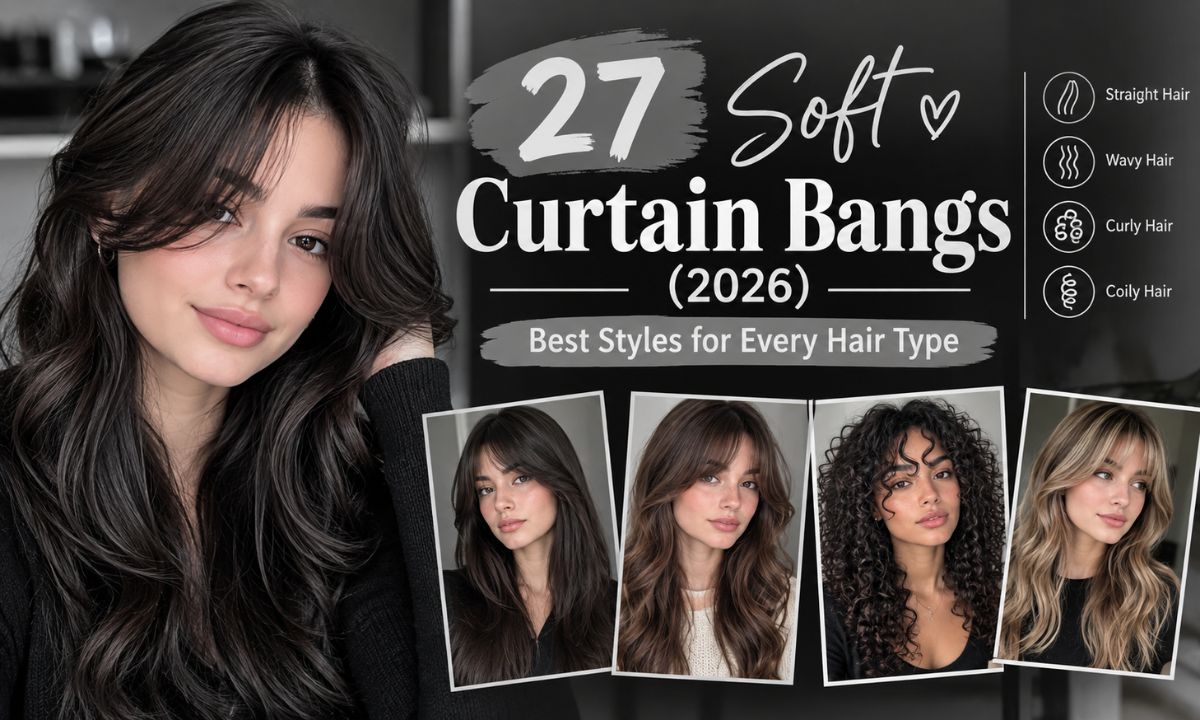
Soft curtain bangs are one of the easiest ways to change your look without a big commitment. They part in the middle, sweep gently to each side, and blend into the rest of your hair. The result is a relaxed frame around your face that works on almost anyone.
If you have searched for soft curtain bangs, you have probably seen all kinds of versions. Some people want soft curtain bangs for curly hair. Others want soft curtain bangs for short hair, long hair, or even a male or boy cut. The good news is that the style bends to fit your texture, length, and face shape. You just need the right cut and the right plan.
This guide covers 27 detailed ideas, sorted by hair type. You will also find a face shape chart, a stylist script, daily styling tips, and a plain talk about when this fringe is not a good idea. Everything is written for real life, so you can walk into a salon in the US with a clear picture in your mind.
Quick note on the name: classic curtain bangs are often longer and more dramatic. Soft curtain bangs are lighter, shorter in weight, and more blended. They look less like a “bang” and more like a gentle part of your layers. Think of them as the everyday version.
| Feature | Soft Curtain Bangs | Classic Curtain Bangs |
| Weight | Light and airy | Fuller and heavier |
| Length | Brow to cheekbone | Often cheekbone to chin |
| Blend | Melts into layers | More visible sections |
| Upkeep | Low | Medium |
| Best for | Everyday, low effort | Bold, retro looks |
Soft Curtain Bangs on Fine and Thin Hair
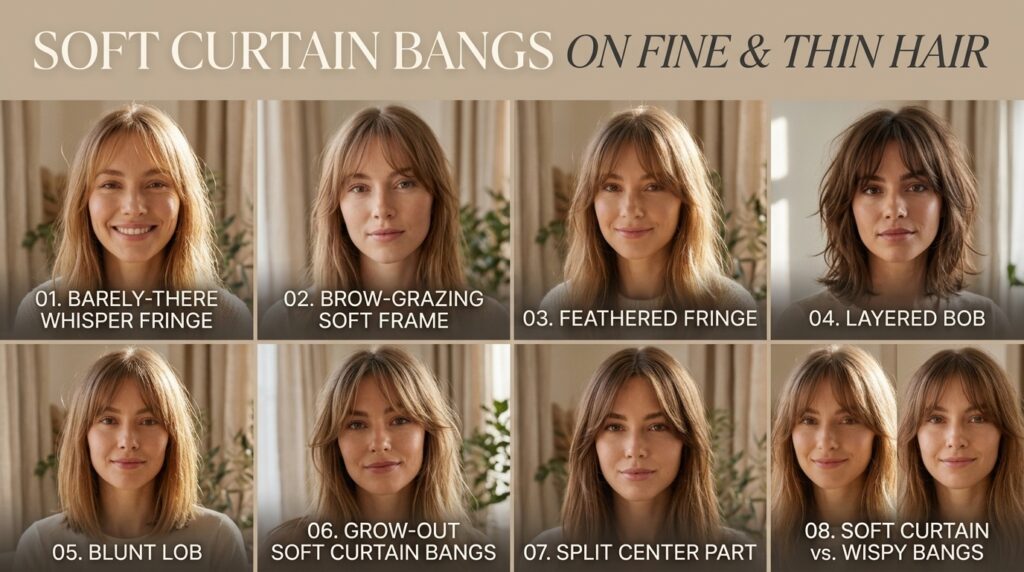
Fine hair can look flat when a fringe is too heavy. The goal here is to keep things light. A soft curtain bang adds shape and movement without taking too much hair from the back.
Most stylists suggest a small fringe section for fine strands. Taking too much from the crown can leave the rest of your hair looking thin. Ask for a narrow triangle of hair, and keep the ends soft and feathered.
Here are eight ideas that work well on fine and thin hair.
1. Barely-There Whisper Fringe on Fine Straight Hair
This is the lightest version of the style. The fringe is cut very thin, so you can see your forehead through it. It gives you the look of bangs without the weight.
It works best on straight, fine hair that falls flat. The wispy ends move easily and never look heavy. You can part it in the center and let it fall naturally.
Best for: straight hair, first-time fringe wearers Style tip: use a tiny bit of dry shampoo at the roots to keep it from going oily.
2. Brow-Grazing Soft Frame for Oval Faces
An oval face can wear almost any length, so brow-grazing bangs are a safe and flattering pick. The ends just touch the top of your eyebrows. Then they sweep out and away.
This length opens up your eyes. It also keeps the look neat when your hair is thin. Because it is short, it needs a trim every four to five weeks.
- Keeps your eyes in focus
- Easy to pin back when you grow it out
- Pairs well with long, flat hair
3. Feathered Fringe with Air-Dry Styling
Not everyone wants to blow-dry every morning. A feathered fringe is cut with soft, uneven ends. That makes it fall into place as it air-dries.
Ask your stylist to point-cut the ends. This means cutting into the hair at an angle instead of straight across. The ends look soft and a little messy in a good way.
To style it, apply a pea-sized amount of lightweight mousse to damp hair. Then part it and leave it alone. Do not touch it while it dries, or it may frizz.
4. Layered Bob with Soft Curtain Fringe on Fine Hair
A bob with layers gives fine hair extra body. Add a soft curtain fringe and the whole cut feels lifted. The layers around the jaw match the fringe, so everything blends.
Keep the layers light. Too many layers on fine hair can make the ends look see-through. Two or three long layers are enough.
This is a great pick for soft curtain bangs for short hair, since the bob length keeps things easy and neat.
5. Blunt Lob with Wispy Fringe Contrast
A blunt lob is a one-length cut that sits near the collarbone. It looks sharp and thick, even on fine hair. A wispy fringe in front adds a soft contrast.
The mix of crisp ends and gentle bangs looks modern. It also makes thin hair look fuller at the bottom. Ask for the fringe to blend only into the front pieces, not the whole lob.
Good to know: this cut looks best on straight or slightly bent hair. Heavy curls can break up the blunt line.
6. Grow-Out Soft Curtain Bangs at Six Weeks
At about six weeks, your fringe will likely reach your cheekbones. That is not a bad thing. In fact, many people like it better at this stage.
The longer pieces tuck behind your ears and start to look like face-framing layers. This stage needs less work. You can still sweep it to the sides or pin it with a clip.
- Week 1 to 3: brow length, very defined
- Week 4 to 6: eye to cheekbone, softer
- Week 7 and up: blends into layers
7. Split Center Part with Asymmetric Fall
A perfectly even part can feel stiff. A split with one side slightly longer feels more casual. The fringe falls in two different ways, which adds movement.
This is a good trick for fine hair because the uneven shape creates the look of volume. It also hides a cowlick, which is a patch of hair that grows in a different direction.
Ask your stylist to cut one side about half an inch longer. Then they can soften both ends.
8. Soft Curtain Bangs vs. Wispy Bangs
People mix these two up all the time. Wispy bangs are thin, see-through, and sit straight across the forehead. Soft curtain bangs are parted in the middle and sweep to the sides.
Both are light. But they do different jobs. Wispy bangs cover the forehead. Curtain bangs frame the face. If you want something to hide a high forehead, go wispy. If you want a face-framing look, go curtain.
| Detail | Soft Curtain Bangs | Wispy Bangs |
| Part | Center or slight side | No part, straight across |
| Coverage | Frames sides of face | Covers forehead |
| Shape | Sweeps outward | Lies flat |
| Grow-out | Easy and graceful | Can feel awkward |
| Best for | Most face shapes | Round or square faces seeking softness |
Soft Curtain Bangs on Wavy and Textured Hair
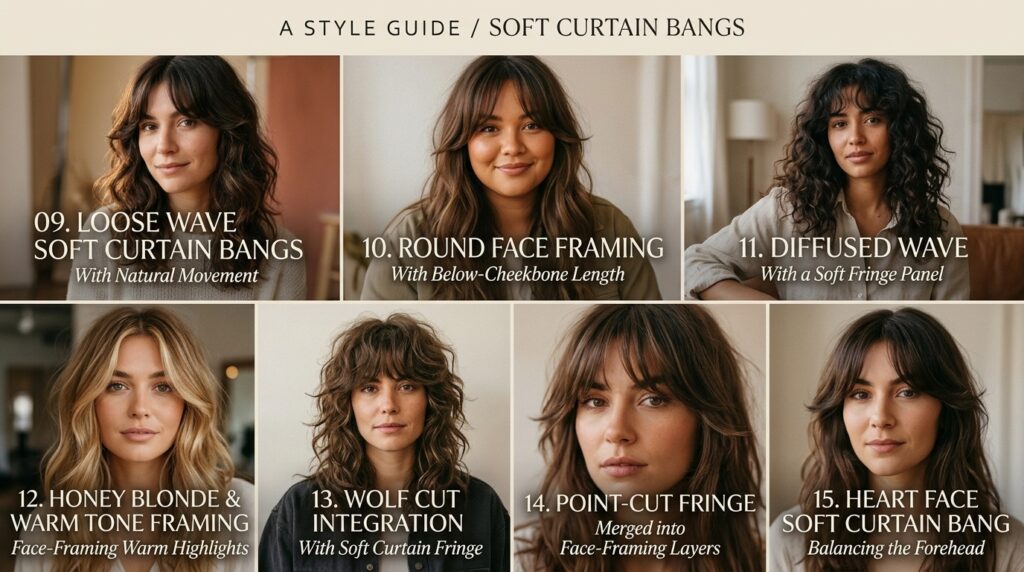
Waves and curls add life to a fringe. The same cut can look totally different on wavy hair. It may bounce up or spring shorter after drying. That is normal, so plan for it.
If you want soft curtain bangs for curly hair, always ask for a dry cut. Curls shrink as they dry. A stylist who cuts them dry can see the true length and shape.
Here are seven ideas that celebrate natural texture.
9. Loose Wave Soft Curtain Bangs with Natural Movement
Loose waves and curtain bangs go together very well. The fringe takes on the same gentle bend as the rest of your hair. That makes the whole look feel connected.
Leave the fringe a little longer than you think you need. Waves lift when dry. A fringe that starts at the eyebrow can end up near the forehead once it bounces.
Style tip: use a light curl cream and scrunch it in. Then let it air-dry.
10. Round Face Framing with Below-Cheekbone Length
Round faces look best with bangs that draw the eye downward. Pieces that end below the cheekbone create vertical lines. These lines make the face look longer and slimmer.
Avoid short, brow-length bangs here. They can add width across the forehead. Instead, keep the fringe long and let it sweep out toward the jawline.
- Adds length to the face
- Softens the cheeks
- Works on straight, wavy, or curly hair
11. Diffused Wave with a Soft Fringe Panel
Diffusing is drying your hair with a special attachment that spreads the air. It keeps waves and curls from frizzing. A soft fringe panel is a small, flat section in the front that you diffuse on a low setting.
This look gives you volume at the roots and clean curls through the ends. The fringe stays soft and doesn’t separate into clumps.
Use low heat and low speed. High heat can cause frizz and break the curl pattern.
12. Honey Blonde and Warm Tone Framing
Color can make curtain bangs stand out. Honey blonde pieces around the face catch the light and show off the curve of the fringe. The warm tones also add a glow to the skin.
Ask for color placed only around the front pieces. This is often called a money piece. It is a bright strand near the face that makes the whole style pop.
Remember that lightened hair is more fragile. Use a bond-repair treatment once a week to keep the ends strong.
13. Wolf Cut Integration with Soft Curtain Fringe
The wolf cut is a shaggy, layered style with lots of texture. It already has a lived-in feel. A soft curtain fringe fits right into it.
The short top layers blend into the fringe, so you don’t see a clear line between them. This makes it one of the best soft curtain bangs with layers.
This cut suits wavy and thick-wavy hair best. On very fine, straight hair, it can look too choppy.
14. Point-Cut Fringe That Merges into Face-Framing Layers
Point-cutting means the stylist snips into the ends vertically. It removes bulk and creates a feathered edge. When the fringe is point-cut, it melts into the face-framing layers with no hard lines.
This is a go-to technique for soft curtain bangs hairstyles of all kinds. It is gentle on wavy hair, because it keeps curls from forming a thick shelf at the front.
Ask your stylist if they plan to use point-cutting. A good one will say yes.
15. Heart Face Soft Curtain Bang: Balancing the Forehead
A heart-shaped face is wider at the forehead and narrower at the chin. Curtain bangs help balance this. They break up the forehead and add width near the jaw.
Choose a length that ends around the cheekbone. It softens the top of the face and draws the eye down. Keep the sweep wide so it frames the cheeks.
Avoid: very short, blunt bangs. They can make the forehead look even wider.
Soft Curtain Bangs on Thick and Dense Hair
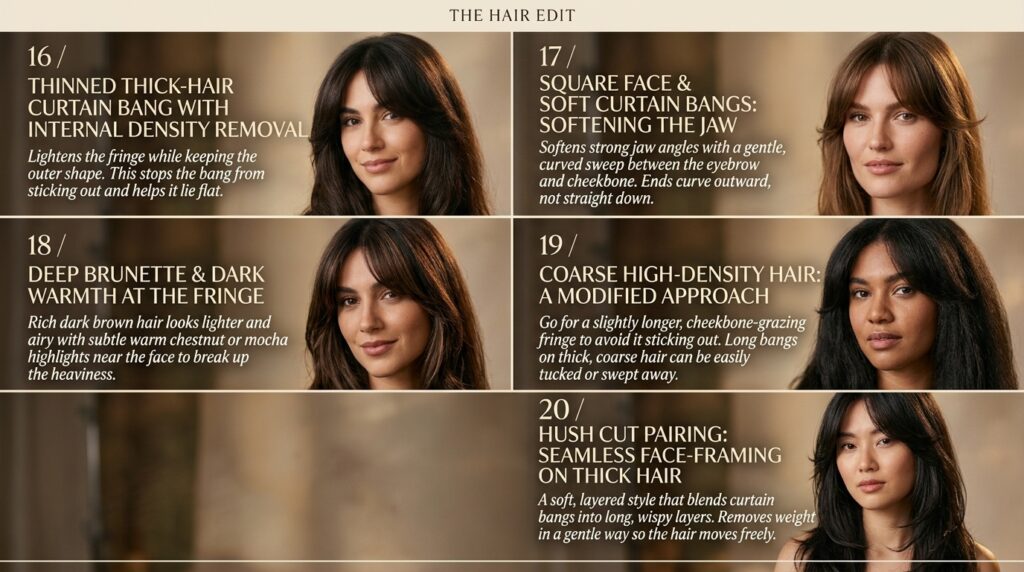
Thick hair has a lot of power. It also has a lot of weight. A fringe cut from thick hair can look bulky and puffy if it is not shaped well.
The key is to remove weight from the inside, not just the ends. Ask your stylist to thin the fringe lightly and keep the sides soft. Do not let them take too much, or you will end up with frizz.
These five ideas show how to make thick hair work.
16. Thinned Thick-Hair Curtain Bang with Internal Density Removal
Internal density removal means the stylist takes out small bits of hair from the inside of the section. You can’t see it from outside. It lightens the fringe while keeping the outer shape.
This stops the bang from sticking out like a shelf. It also helps the hair lie flat against the forehead.
Ask for a conservative cut at first. You can always take more off later, but you can’t put it back.
Read More: Best Caesar Haircuts for Men
17. Square Face and Soft Curtain Bangs: Softening the Jaw
A square face has a strong jaw and a wide forehead. Soft curtain bangs soften these angles. The curved sweep creates a gentle line across the face.
Pick a length between the eyebrow and cheekbone. Make sure the ends curve outward, not straight down. Straight edges can make a square face look more boxy.
- Rounds out sharp corners
- Draws attention to the eyes
- Looks great with long layers
18. Deep Brunette and Dark Warmth at the Fringe
Dark brown hair looks rich with a bit of warmth near the face. Think chestnut, mocha, or soft caramel. These tones lift the fringe and add depth.
Thick dark hair can look heavy at the front. A small amount of lighter color breaks it up. It makes the bangs look airy and soft.
Use a color-safe shampoo. Dark dye fades fast if you wash it often with harsh products.
19. Coarse High-Density Hair: A Modified Approach
Coarse hair has thicker strands. High-density hair has lots of strands per square inch. When you have both, bangs can be tricky.
Go for a slightly longer fringe, near the cheekbone. Short bangs on coarse hair stick out and will not lie flat. A longer cut can be tucked behind your ears or swept away with a brush.
Use a smoothing cream or a light oil on damp hair. It adds shine and keeps flyaways down.
20. Hush Cut Pairing: Seamless Face-Framing on Thick Hair
The hush cut is a soft, layered style that blends curtain bangs into long layers. It was made popular by Korean salons. It has a smooth, airy shape with no harsh lines.
On thick hair, this cut removes weight in a gentle way. The layers move freely, and the fringe fits in as one flowing piece.
It also works well as a soft curtain bangs for long hair option. The long layers keep length while the fringe adds a fresh frame.
Length and Framing Variations
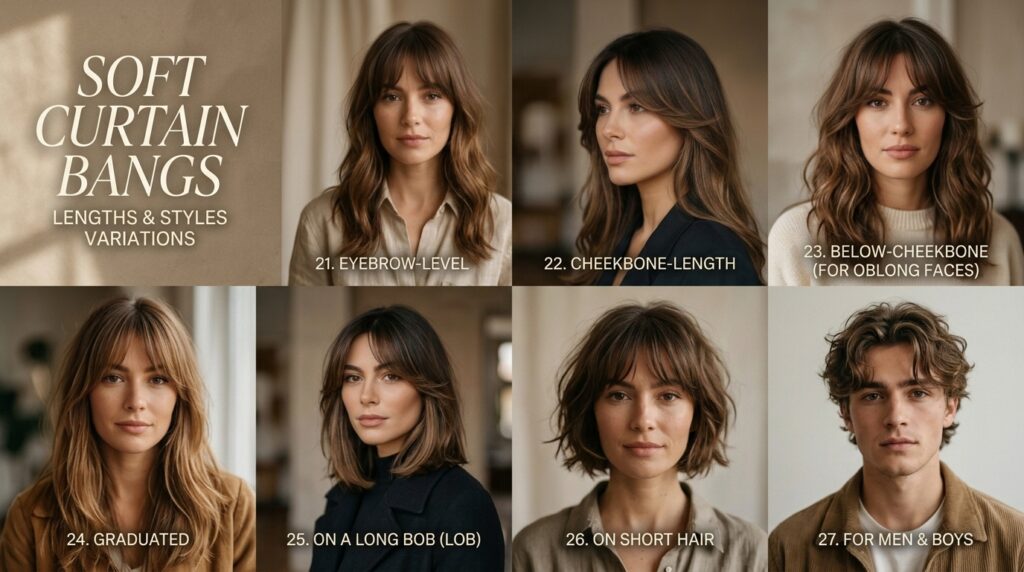
Length is the biggest choice you will make. A half inch can change the whole look. Here is a simple guide before we go through the details.
| Length | Where It Ends | Best Face Shape | Upkeep |
| Eyebrow level | At the brows | Oval, heart | High |
| Cheekbone length | Mid-cheek | Round, square, heart | Medium |
| Below cheekbone | Near the jaw | Oblong, round | Low |
| Graduated | Shorter center, longer sides | Most shapes | Medium |
21. Eyebrow-Level Soft Curtain Bangs
This is the classic, cute version. The center falls right at your brows. Then the sides sweep out and down.
It makes a bold style statement. It also makes your eyes the main feature. Because it is short, it needs frequent trims. Plan to visit your stylist every four to six weeks.
If you want soft curtain bangs for a boy or a male cut, this length works nicely too. Ask for a textured, slightly messy finish and keep the sides short. It gives a relaxed, modern look.
22. Cheekbone-Length Soft Curtain Bangs
This is the most popular choice. It is long enough to tuck behind your ears. It is short enough to still read as a fringe.
It suits a wide range of face shapes. It adds lift to the cheeks and brings out the eyes. It also grows out more easily than shorter lengths.
If you aren’t sure what to pick, start here. A stylist can always shorten it later.
23. Below-Cheekbone Curtain Bangs for Oblong Faces
An oblong face is longer than it is wide. The goal is to add some width. Bangs that stop below the cheekbone can do just that. They sweep across the sides of the face and break up the length.
Make the fringe fuller and a bit wider than for other shapes. A thin, wispy fringe can make an oblong face look even longer.
- Adds width to a long face
- Soft and gentle
- Easy to grow out
24. Graduated Curtain Bang: Shorter Center, Longer Outer Corners
A graduated bang has a short center and longer sides. The shape slopes down from the middle to the outer edges. It looks like a soft arch around the face.
This version is very flattering because it draws the eye outward. It gives you the look of lifted cheekbones. It also blends easily into long layers.
It is a smart pick for soft curtain bangs with layers, since the slope leads right into the rest of the cut.
25. Soft Curtain Bangs on a Long Bob: The Classic Pairing
The long bob, or lob, is one of the best haircuts for curtain bangs. It hits somewhere between your chin and shoulders. Its shape is clean, and it stays easy to style.
Adding bangs makes the lob feel fresher. The two cuts echo each other with soft, curved lines. Together, they make a polished look for work or a night out.
Keep the ends of the lob slightly textured. A flat, blunt edge can feel stiff next to soft bangs.
26. Soft Curtain Bangs on Short Hair and Cropped Cuts
Short hair can wear curtain bangs too. The trick is to keep the fringe in balance with the rest of the cut. On a pixie or a short bob, the bangs should sit at the brow or just below it.
Ask your stylist to blend the sides into the bangs. This stops the front from looking like a separate piece. A light, textured finish works best, and it keeps the cut looking fresh instead of boxy.
- Works well on pixie cuts, short bobs, and cropped shags
- Needs a trim every three to four weeks
- Looks best with a little texture spray
Style tip: use your fingers, not a brush. A quick scrunch with a dab of paste gives the fringe a soft, lived-in shape.
27. Soft Curtain Bangs for Men and Boys
Curtain bangs are no longer just a women’s trend. Many men and boys now wear a soft, parted fringe. It looks relaxed, modern, and easy to manage.
The cut usually has a center part, with the front falling to each side at eyebrow or cheekbone length. The sides stay shorter and neat, and the top keeps some length. It suits straight and wavy hair best.
| Detail | What to Ask For |
| Part | Center or a soft off-center |
| Length | Brow to cheekbone |
| Sides | Tapered or lightly trimmed |
| Finish | Matte and textured |
Use a small amount of sea salt spray or light clay. Keep the fringe slightly messy. A stiff, slick finish takes away the whole point of the style.
Face Shape Guide for Soft Curtain Bangs
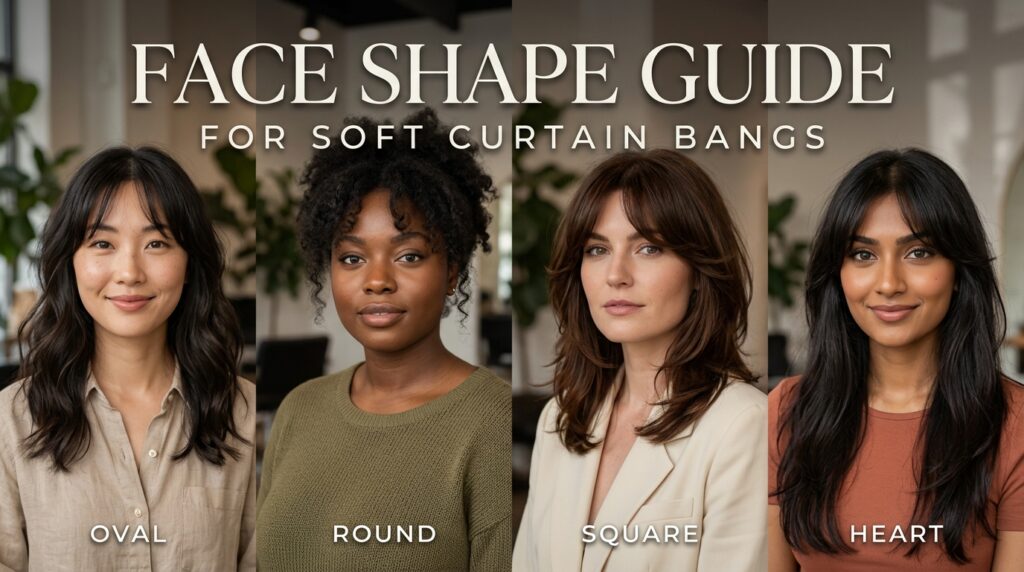
Your face shape guides your bangs. The right cut balances your features. Here is a short guide for each shape.
| Face Shape | What It Looks Like | Best Length | Tip |
| Oval | Balanced, gently curved | Any length | Experiment freely |
| Round | Full cheeks, soft jaw | Below cheekbone | Keep the sweep long |
| Square | Strong jaw, wide forehead | Brow to cheekbone | Curve the ends outward |
| Heart | Wide forehead, narrow chin | Cheekbone | Keep bangs wide |
| Oblong | Long and narrow | Below cheekbone | Add fullness at the sides |
| Diamond | Wide cheekbones | Brow level | Soften the temple area |
Not sure of your shape? Pull your hair back. Stand in front of a mirror and trace your face with a dry-erase marker. The outline will show your shape.
Remember, these are guidelines, not rules. Many people with round faces wear brow-length bangs and look great. Hair texture and personal style matter just as much as shape.
If you are still torn, ask your stylist to try the fringe in a “dry cut” and then adjust. It is the best way to see how it will really look on you.
What to Tell Your Stylist

A good conversation with your stylist is the key to a good fringe. Many bad bangs come from unclear requests. Here is how to get exactly what you want.
Bring two or three photos. Choose pictures of people with your hair type and similar length. A photo of straight hair will not help if you have curls.
Use simple, clear words. Say things like “soft, parted in the middle, ending at my cheekbone.” Avoid vague words like “long” or “short.”
Here is a short script you can use:
- “I’d like soft curtain bangs, parted in the center.”
- “I want them to blend into my layers.”
- “Please cut them dry, since my hair has texture.”
- “Keep the length at my cheekbone for now.”
- “Can you point-cut the ends so they look light?”
Questions worth asking:
- How will this look when it dries?
- How often will I need a trim?
- Can you show me how to style it at home?
- What should I do if I do not like it?
Ask them to start longer. Hair can always be cut shorter. It cannot grow back overnight. A cautious stylist is a good stylist.
Maintenance and Styling
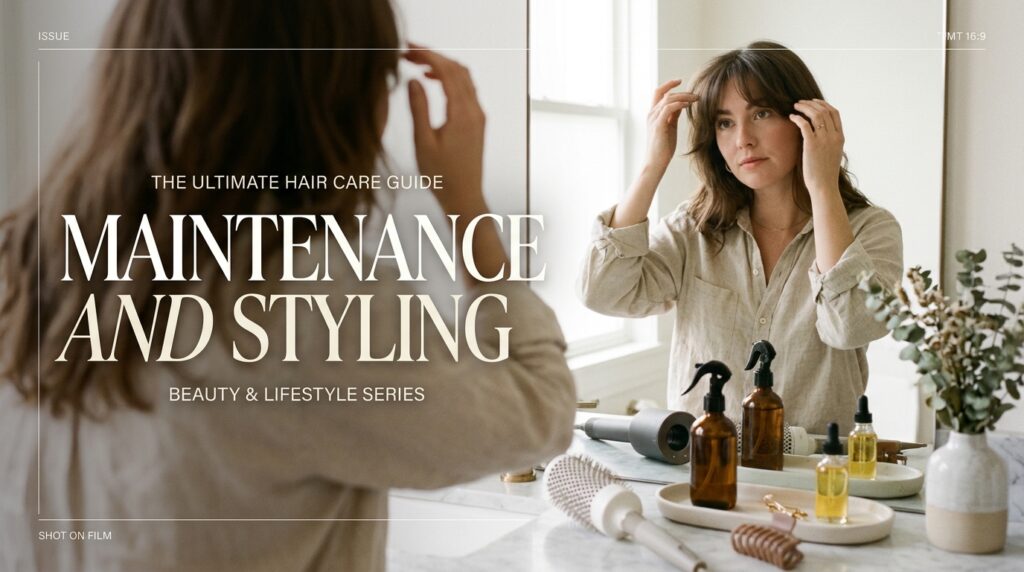
Soft curtain bangs are low-fuss, but they do need some care. A few small habits will keep them looking fresh every day.
Trim schedule. Plan a quick trim every four to six weeks. Many salons offer free bang trims between full cuts. Call and ask. It is a great way to save money.
Washing. Bangs get oily faster than the rest of your hair. That is because they sit near your forehead. Wash them in the sink between full washes. This takes about two minutes and keeps them clean.
Daily styling steps:
- Start with damp, not wet, hair.
- Part your fringe in the center.
- Use a round brush and blow-dry it down and out.
- Direct the airflow to each side.
- Finish with a light spray for hold.
Helpful products:
| Product | What It Does | Best For |
| Dry shampoo | Absorbs oil | All hair types |
| Lightweight mousse | Adds soft hold | Fine hair |
| Curl cream | Defines texture | Wavy and curly hair |
| Smoothing serum | Controls frizz | Thick and coarse hair |
| Texture spray | Adds grip and volume | Straight hair |
Keep your hands away from your forehead. Touching your bangs spreads oil. It also makes them go flat faster.
If your bangs get in the way, use a small clip. You can also pin them back with a thin headband. During the grow-out phase, that helps a lot.
When Soft Curtain Bangs Are Not the Right Choice
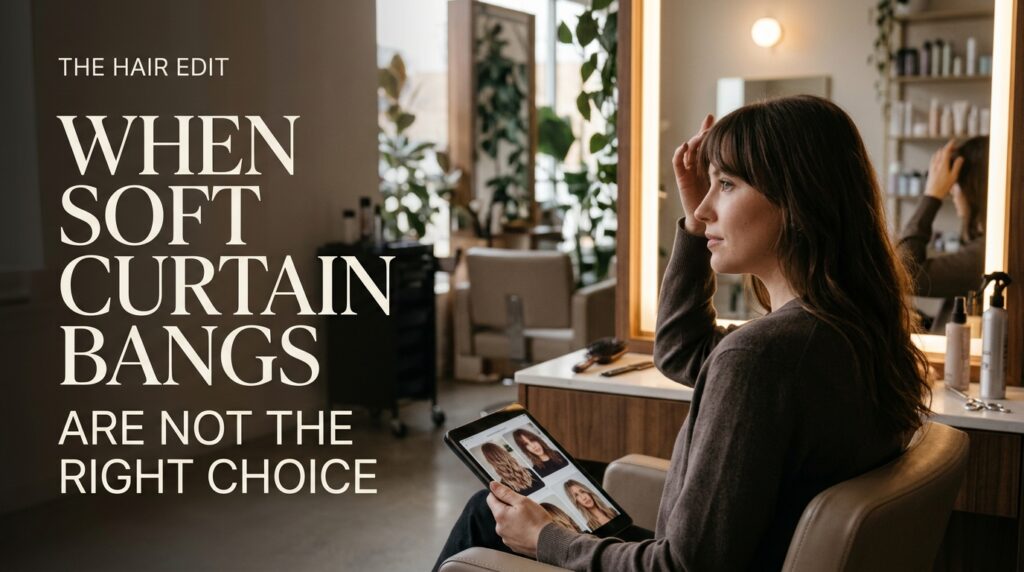
Curtain bangs are friendly, but they are not perfect for everyone. A little honesty up front can save you from a haircut you will regret.
Skip the cut if you:
- Have a strong cowlick right at the front hairline
- Have a very low or very high hairline that fights the shape
- Exercise a lot and hate hair in your face
- Want a zero-maintenance style
- Have extremely tight coils and don’t want shrinkage
Cowlicks are a big one. A cowlick can push the fringe in the wrong direction every day. Some stylists can work around it. Others will tell you to skip bangs.
Very curly or coily hair can also be tricky. The hair springs up as it dries, so the final length is hard to predict. If you still want the style, go to a stylist who is trained in curly cuts. Ask for a dry cut, and start longer.
Lastly, think about your lifestyle. If you swim often or wear hats, bangs may feel annoying. You can try clip-in bangs first. It is a low-risk way to test the look at home.
Not sure? Wait a few weeks. Try pinning your hair in a similar shape and see how it feels. If you love it, book the appointment.
Frequently Asked Questions
What are soft curtain bangs?
Soft curtain bangs are light, face-framing bangs that part in the middle and sweep to each side. They blend into your layers for a natural look.
Are soft curtain bangs good for curly hair?
Yes, they can look great on curly hair. Ask for a dry cut and start a little longer, because curls shrink as they dry.
How often should I trim soft curtain bangs?
Most people need a trim every four to six weeks. Many salons offer quick bang trims between full haircuts, sometimes for free.
Can men or boys wear soft curtain bangs?
Yes. Many men and boys wear them with a textured, medium-length cut. Ask for a relaxed shape with shorter sides and a soft, parted fringe.
What is the difference between soft curtain bangs and regular curtain bangs?
Soft curtain bangs are lighter, shorter in weight, and blend more into your layers. Regular curtain bangs are often longer and fuller.
Final Thoughts
Soft curtain bangs are a flexible style that fits many hair types, lengths, and faces. Fine hair needs a light touch. Wavy hair needs room to bounce. Thick hair needs less weight. When the cut matches your hair, the result looks natural and effortless.
The best fringe starts with a clear plan. Know your face shape, pick a length that suits you, and talk through the details with your stylist. Start a little longer, and trim as you go. With easy care and a smart cut, your soft curtain bangs can be the best part of your look in 2026.

Jasper Cole is a content writer and researcher at Faxhion Infoz, focusing on hair care, hairstyles, styling ideas, and hair related topics. He researches information from reliable sources and presents practical insights in simple language. His goal is to help readers better understand hair care and make informed everyday choices.