

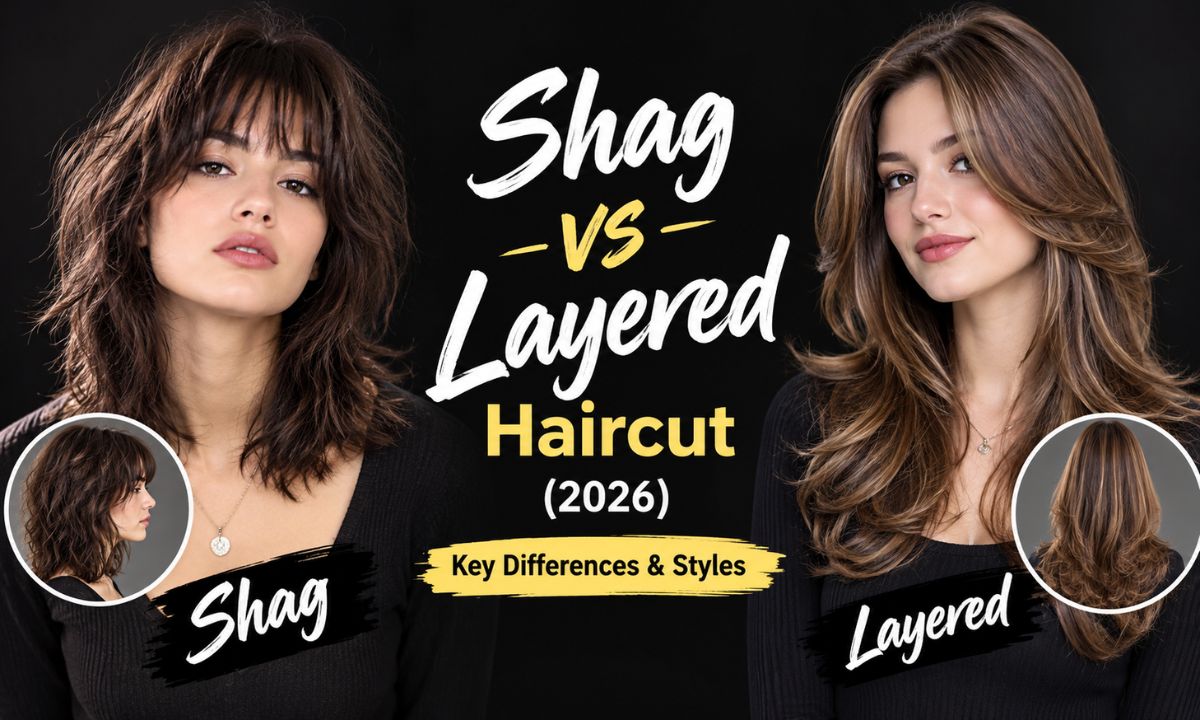
You show a stylist a photo and say, “I want layers.” Then you leave with a full shag. Or the other way around. It happens all the time, and it is not always the stylist’s fault.
Shag and layered cuts look close. Both use shorter pieces mixed with longer ones. Both add movement. But they are not the same haircut, and the difference matters a lot once you are in the chair.
This guide breaks it down in plain words. You will learn what each cut is, how to spot one in a photo, which one fits your hair, and which myths lead to salon regrets. You will also find ideas for long, medium, men’s, and mature shag styles.
What a Shag Haircut Actually Is
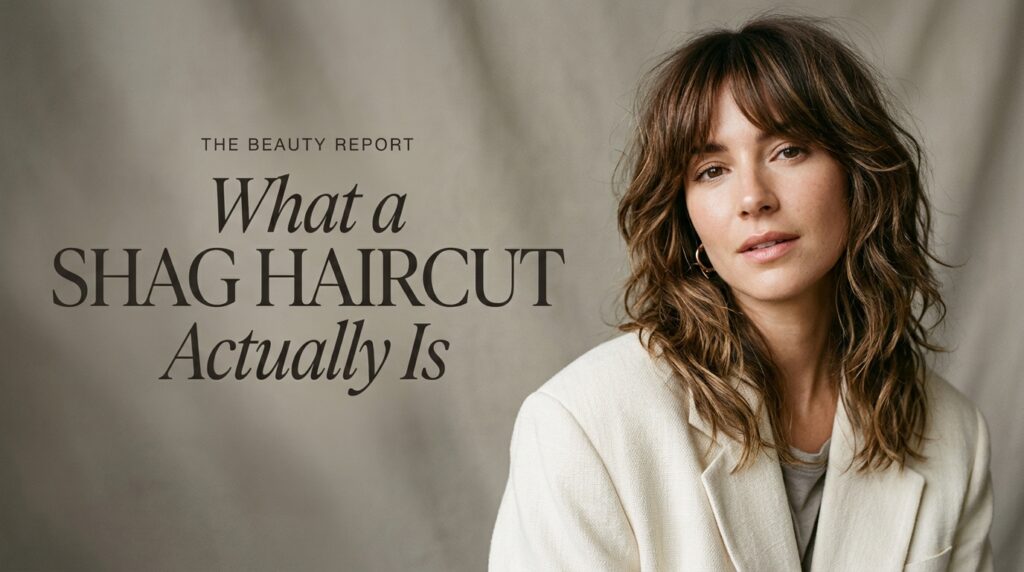
A shag is a cut built on purpose to look messy, light, and full of texture. The stylist cuts short, choppy layers all through the hair, often starting near the crown. These layers are not blended smooth. You can see the steps. That “broken up” look is the whole point.
The shag started in the 1970s. Think rock stars, feathered ends, and hair that looked slept in. In 2026 the shag is back in a softer form. It is less costume and more everyday. Modern shags keep the choppy ends and the volume at the top, but they feel wearable for work, school, and weekends.
Here are the main features of a true shag:
- Short layers at the crown that build height
- Choppy, uneven ends instead of one clean line
- Visible texture from root to tip
- Wispy or curtain bangs in most versions
- Movement that works best with a little air-dry or scrunch
A shag works on straight, wavy, and curly hair. Fine hair gets lift. Thick hair gets relief from heavy weight. Curly hair gets shape and bounce. The cut does not need much styling, but it does need a stylist who knows how to texture hair with a razor or point cutting.
One more thing. A shag is a statement. You choose it when you want your hair to have attitude. If you want hair that simply looks neat, a layered cut may suit you better.
What a Layered Cut Actually Is
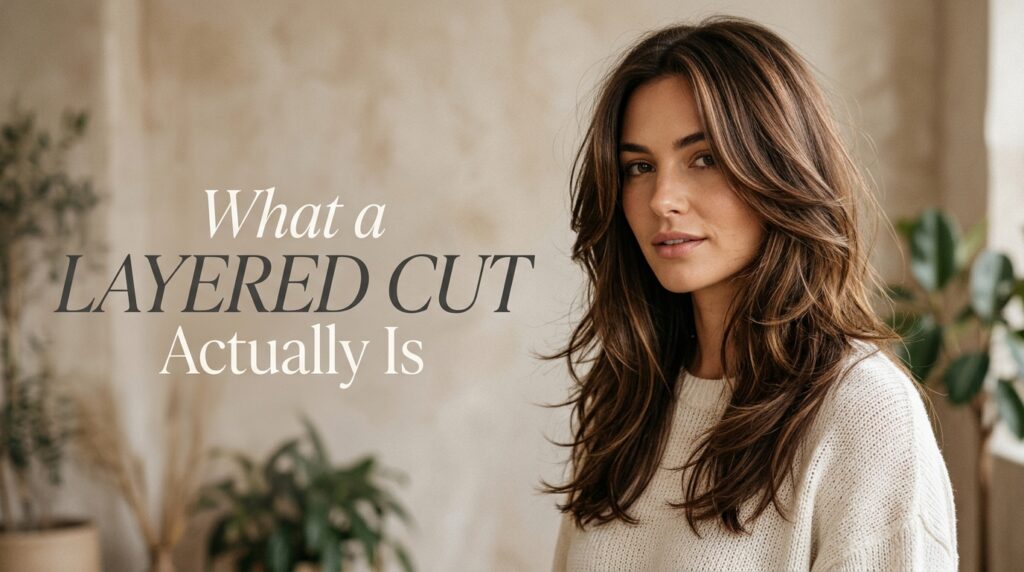
A layered cut is a much wider term. It means the hair is cut in different lengths so it does not fall in one flat block. Almost every modern haircut has some layers. A bob can have layers. A long cut can have layers. Even a pixie is layered.
The goal of layering is shape and flow. Layers remove weight, add bounce, and help hair move when you walk. The stylist blends the lengths so the steps are hard to see. The result looks smooth and soft, not choppy.
Layers come in a few common forms:
- Long layers: Gentle length changes that frame the face
- Short layers: More lift and volume, often for fine hair
- Face-framing layers: Pieces around the cheeks and chin
- Invisible layers: Hidden cuts under the top section to remove bulk
Because layers are flexible, a layered cut can be sleek or casual. You can blow it out for a polished look. You can curl it for a party. You can wear it straight for the office. This is why layers are the safest choice for many people.
Layers also depend on hair type. Fine hair needs fewer, longer layers so it does not look thin. Thick hair can handle more layers, which remove bulk. Curly hair needs layers cut with the curl pattern in mind. A good stylist will adjust the plan to your texture.
The key idea is blending. In a layered cut, the transitions feel smooth. In a shag, the transitions feel broken on purpose. That small difference changes the whole personality of the hair.
Shag vs Layered Cut at a Glance
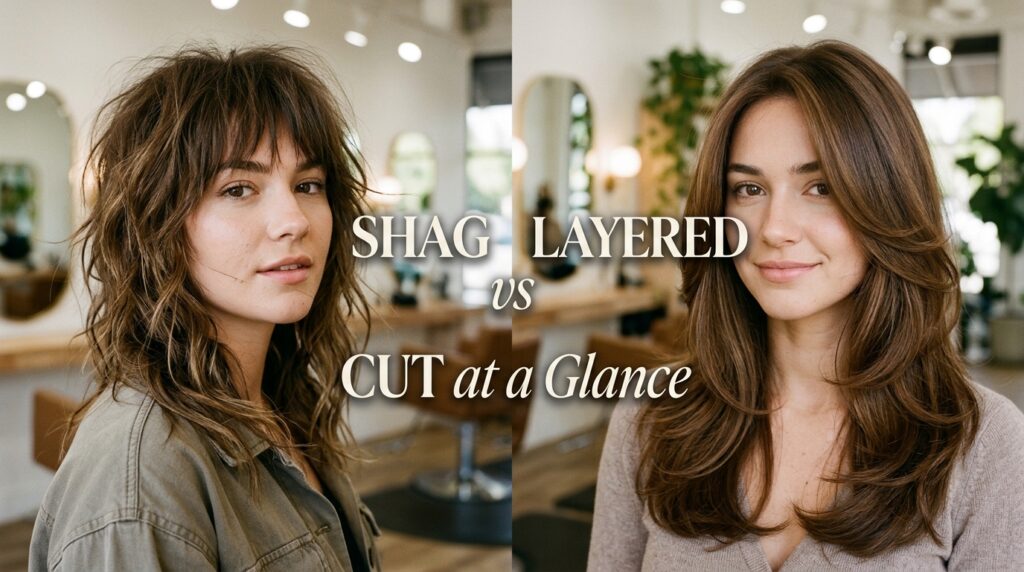
Before the deep dive, here is a quick side-by-side. Use it as a cheat sheet when you talk to your stylist.
| Feature | Shag | Layered Cut |
| Overall look | Messy, textured, bold | Smooth, soft, polished |
| Layer style | Short, choppy, disconnected | Blended, flowing, connected |
| Ends | Wispy and uneven | Cleaner and more even |
| Bangs | Almost always included | Optional |
| Volume | High at the crown | Moderate and balanced |
| Styling effort | Low to medium, texture based | Low to medium, shape based |
| Grow-out | Can look uneven fast | Grows out softly |
| Best for | People who want attitude | People who want versatility |
Now let us look at the most popular shag and layer styles people search for in 2026. Each one has its own feel.
Shag vs wolf cut
The shag and the wolf cut are cousins, not twins. Both are full of layers. Both have bangs. But the wolf cut is a mix of a shag and a mullet. It is shorter and wilder on top, with longer, thinner pieces at the back.
A classic shag keeps a more even shape from front to back. The layers flow around the head. A wolf cut has a stronger drop between the top and the nape. That gives it a rock-and-roll, almost 80s edge.
If you want a cut you can wear to the office without comment, pick a shag. If you want people to notice your hair first, try the wolf. The wolf also needs more upkeep. The short top section grows out fast and loses its shape.
Hair type plays a role too. Thick, wavy hair handles a wolf cut best because it has the body to hold the short top. Fine, straight hair can look thin at the back. A shag is more forgiving here. Ask your stylist to adjust the nape length to fit your texture.
Long shag haircut
A long shag keeps your length and adds life to it. The shortest layers sit around the crown and face. The rest falls past the shoulders in light, feathered pieces. It is a great way to get movement without a big chop.
This style works well on thick, long hair that feels heavy. The layers cut weight and let the hair swing. On fine hair, ask for fewer layers so the ends do not look thin.
Style it with a light cream or sea salt spray. Let it air dry. Rough dry the roots for lift. The long shag looks best when it is a bit undone.
Watch the length of the shortest layer. If it sits too high, the crown can look stubby. Most stylists start the first layer near the cheekbone or chin. This keeps the shape long and soft. Plan a trim every eight to ten weeks to keep the ends fresh without losing length.
Medium shag haircut
The medium shag is the most popular version. It sits between the chin and the collarbone. This length is easy to care for and easy to style. It also hides a lot of hair problems, like flat roots or uneven density.
You get the full shag look, with choppy ends, a lifted crown, and bangs. But you do not wait years to grow it. If you are trying a shag for the first time, start here.
A medium shag works on most face shapes. Round faces get lift at the top. Long faces get width from the side layers. Square faces get softer edges.
Daily styling takes about five minutes. Scrunch a mousse into damp hair. Dry with a diffuser or let it air dry. Add a pinch of texture spray at the ends. If your hair is straight, a light wave from a curling iron helps the layers show.
Shaggy layers men
Men are wearing shags more than ever. The men’s version is shorter on the sides and fuller on top. The layers are textured, and the hair often falls forward over the forehead or sweeps to the side.
Shaggy layers for men work best on medium-length hair, about three to five inches on top. Wavy hair is ideal, but straight hair can do it with a texture product. Curly hair looks great with a shag because the layers control the shape.
Keep the sides tidy. A taper or low fade makes the top look intentional. Use a matte paste or clay, not a shiny gel. The goal is a lived-in look, not a stiff one.
Tell your barber you want texture on top, not a clean, flat finish. Ask for point cutting so the ends look broken up. Washing every day can dry hair out, so try every other day. Use a light conditioner to keep the layers soft.
Layered shag haircut
A layered shag sits right at the meeting point of the two cuts. It has the full, textured top of a shag, but the layers are blended a little more. The look is softer and easier to live with.
This is a great choice if you like shag texture but fear anything too bold. The ends are not as choppy. The bangs can be longer and less sharp. The result feels modern and relaxed.
Ask your stylist for “a soft shag with blended layers.” That phrase tells them you want volume and movement without a harsh, disconnected finish.
It also works well as a first step. If you are unsure about a full shag, start with a layered shag. Go choppier at your next visit if you like it. This way you test the look with little risk. Many clients find this slow approach leaves them happier.
Butterfly haircut
The butterfly cut went viral for good reason. It uses long layers in the back and short, face-framing layers in the front. Together they create a shape that looks like wings when the hair is blow-dried.
It is more of a layered cut than a true shag. The layers are smooth and bouncy. The focus is on blowout volume and flow, not messy texture. It often comes with curtain bangs.
The butterfly cut suits long hair best. It needs a round brush and a blow dryer to look its best. If you do not like styling every day, a shag may be easier.
The cutting order matters too. The stylist cuts the face-framing layers first and then blends them into the long back layers. Poor blending leaves a visible gap. Ask to see a few past butterfly cuts before you book. Plan a trim every ten to twelve weeks.
Read More: Choppy Razor-Cut Pixie Haircuts for Women
Shaggy layers long hair
Shaggy layers on long hair mean you keep length at the back but add short pieces on top and around the face. The result feels light and airy. The hair does not hang flat.
This is a nice middle path. You get the look of a shag without cutting your length much. It also grows out well because the layers are spread over a long section of hair.
If your hair is very thin, keep the layers subtle. Too many short pieces can make the ends look see-through. Ask your stylist to leave some weight at the bottom.
Wavy and curly textures show this style best. Layers let curls stack and spring instead of hanging in a heavy triangle. For straight hair, a light wave spray helps the layers show. Keep your routine simple with a leave-in conditioner and a wide-tooth comb.
Medium shaggy hairstyles for over 60

Many women over 60 want a cut that adds fullness without looking harsh. A medium shaggy cut can do this well. Soft layers lift thin or fine hair at the crown. A gentle fringe can frame the face and soften lines.
Keep the layers longer and more blended than a young, edgy shag. Avoid very choppy ends, which can look thin on silver or fine hair. A rounded shape works well and is easy to style.
Use a volumizing mousse and a light blow-dry. Gray hair can look dry, so add a small amount of smoothing serum. A shaggy cut like this is low fuss, flattering, and full of life.
Bangs are optional here. A side-swept fringe is gentler than a straight one. If you wear glasses, tell your stylist so the layers around the face do not clash with the frames. A short trim every six weeks keeps the shape neat and the ends healthy.
Women’s shag haircut
A women’s shag is the version most people picture. It has a lifted crown, textured layers, and bangs. The sides are cut to frame the face, and the ends are feathered.
You can wear it at any length, from a short pixie shag to a long, flowing one. Short versions feel bold and playful. Medium versions feel balanced. Long versions feel soft and bohemian.
The cut is also very friendly to different hair types. Fine hair gets a body. Wavy hair gets defined. Curly hair gets bounced and shaped. Pick the length that matches your lifestyle.
Describe the finish, not just the name. Say how choppy you want the ends and how short the bangs should be. A shag can range from soft to rough, and you want to be on the same page. A photo of the front and the side helps a lot.
Bangs shaggy choppy medium layered hair
This long search term describes a very popular combo. It is a medium-length cut with choppy layers and bangs. Think shoulder-grazing hair with wispy fringe and lots of texture.
The bangs can be curtain style, wispy, or blunt. Curtain bangs are the easiest to grow out. Wispy bangs look soft and light. Blunt bangs look bold and need more trims.
Choppy layers give this look its energy. Ask your stylist to texture the ends with a razor or point cut. Then style with a texture spray. The cut should look easy, not overdone.
Care for the bangs daily. Oil from the forehead can make them flat by noon. A little dry shampoo at the roots keeps them light. Many salons offer free bang trims between full cuts, so ask about it when you book.
Shag hairstyles for women over 50
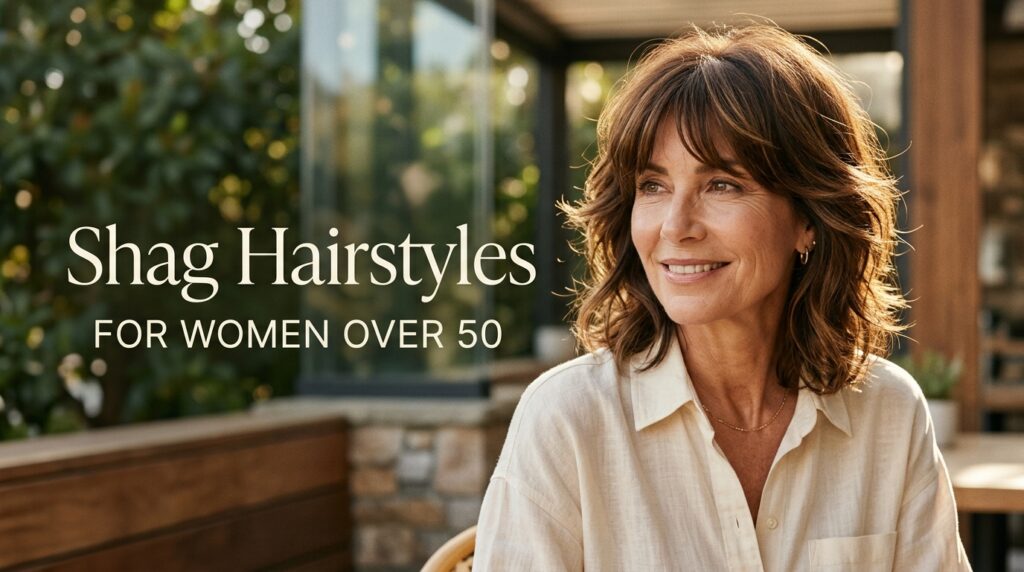
A shag after 50 can look fresh and modern. The trick is to choose the right amount of texture. Too much can look messy. Too little can look flat.
Go for a soft shag with face-framing layers and a light fringe. This brings attention to the eyes and cheekbones. Layers also add body to hair that has thinned with age.
Keep the length at the chin or collarbone. This length is flattering and easy to care for. Ask for a shape that dries well without much work. A good shag should save you time, not take more of it.
Color can help too. Soft highlights or a gloss add depth and show off the layers. A single flat shade can hide the texture. Use a heat protectant if you style with a tool, since hair tends to get drier with age.
Shag vs layers
This is the big question. In simple terms, a shag is a bold type of layered cut. All shags have layers. Not all layered cuts are shags.
Choose a shag when you want volume, texture, and bangs. Choose layers when you want smooth movement and a cleaner finish. If you cannot decide, a layered shag gives you a bit of both.
Think of it as a scale from smooth to messy. Plain layers sit on the smooth end. A full shag sits on the messy end. A layered shag sits in the middle. Point to the spot on that scale that fits you, and your stylist will know what to do.
The next sections show you how to tell the two apart and how to choose.
How to Tell a Shag from a Layered Cut in a Photo
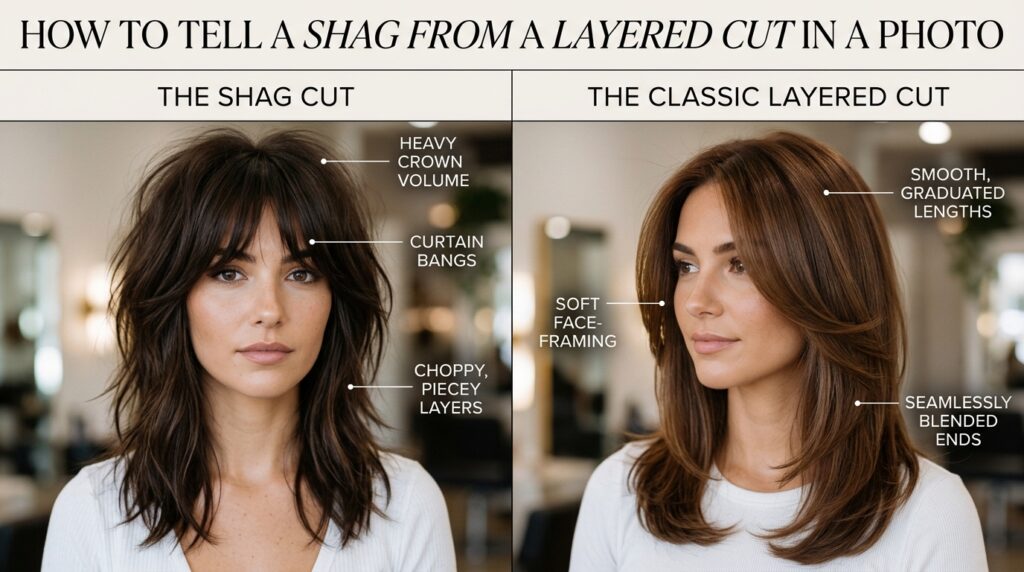
Photos can be tricky. Lighting, filters, and styling can hide the real cut. But a few clear signs will help you tell the difference. This skill is useful when you bring inspiration photos to a salon.
Look at the top of the head, the ends, and the front. These three zones tell you almost everything. Here are the main clues.
A Shag Shows Volume and Choppy Ends While a Layered Cut Looks Blended
Start with the shape. A shag usually has a lot of height at the crown. The hair looks lifted and full. The ends look broken up, like feathers or small points.
A layered cut has a smoother outline. The lengths blend into each other. You do not see sharp steps. The hair looks like it flows in one soft wave from top to bottom.
Try this quick test. Zoom in on the ends. If they look wispy and uneven, it is likely a shag. If they look clean and tapered, it is likely a layered cut.
A Shag Almost Always Has a Fringe While Layers Are Optional
Bangs are one of the easiest signs. Most shags come with some kind of fringe. It might be curtain bangs, wispy bangs, or short choppy bangs. The fringe is part of the shape.
A layered cut can have bangs, but it does not need them. Many layered styles have no fringe at all. The face-framing pieces simply start at the cheekbone or chin.
If you see a cut with no bangs and a smooth finish, it is almost always a layered cut. If you see a messy fringe and a lifted crown, you are looking at a shag.
A Shag Emphasizes Disconnection While Layers Emphasize Flow
Disconnection means the layers do not blend smoothly into each other. In a shag, the short top layers stand apart from the longer lengths below. You can see a clear change in length.
In a layered cut, the opposite is true. The goal is flow. The layers connect. Your eye moves smoothly down the hair with no sudden stops.
Here is a quick reference you can use when you scroll through photos.
| Clue in the Photo | Likely a Shag | Likely a Layered Cut |
| Crown | Lifted and full | Soft and balanced |
| Ends | Choppy and wispy | Smooth and tapered |
| Bangs | Almost always | Sometimes |
| Layer transitions | Visible steps | Blended lines |
| Overall mood | Edgy and messy | Neat and soft |
Which Cut Should You Choose
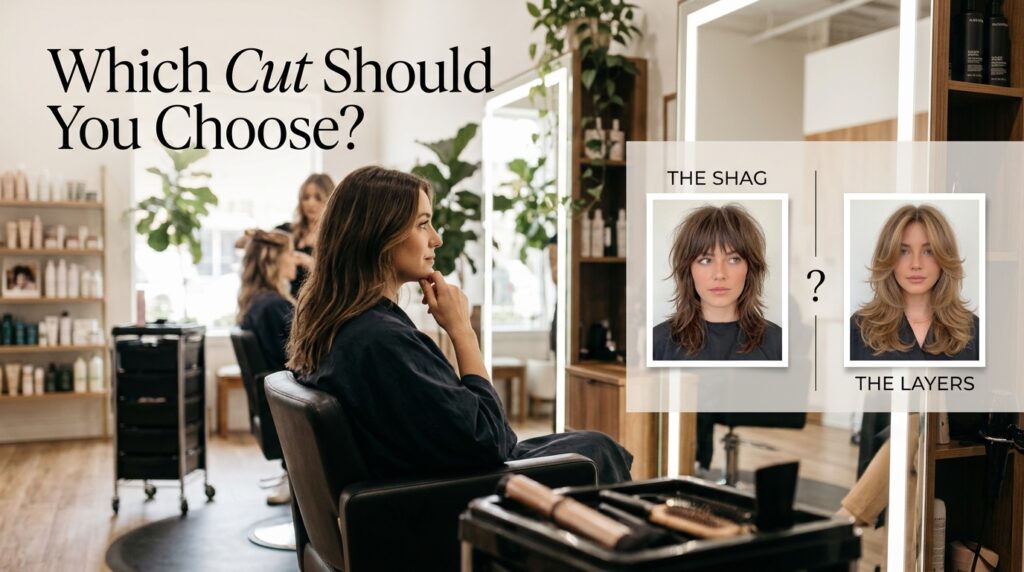
There is no winner here. The better cut is the one that fits your hair, your daily routine, and your taste. Ask yourself three questions. How much time do you spend on styling? How bold do you want to look? How do you feel about the grow-out stage?
Your hair type also matters. Fine, flat hair loves the lift of a shag. Thick, heavy hair needs the weight removal that both cuts offer. Very straight hair may need a bit more product for a shag to hold its texture.
Lifestyle counts as much as hair type. If you work in a formal office, layers may feel safer. If you work from home or in a creative field, a shag fits in easily. Think about hats, sports, and ponytails too. A shag can be hard to tie back, while long layers tie up well.
Choose a Shag for Texture, Volume, and Low-Fuss Movement
Pick a shag if you like a lived-in look. This cut is made for people who air dry, scrunch, and go. It does not demand perfect styling. In fact, too much polish can ruin it.
A shag is also great for adding body to fine hair. The short crown layers lift the roots. The choppy ends create the illusion of thickness. Many people with thin hair see a big change.
Choose a shag if:
- You want a bold, modern look
- You like bangs
- You prefer air drying
- Your hair lacks volume
- You do not mind regular trims to keep the shape
A shag does need a good stylist. The cut depends on skill. Ask to see their past work on shags before you book.
Choose a Layered Cut for Polish, Versatility, and a Softer Grow-Out
Pick layers if you want a safe, flexible cut. You can dress it up or down. You can blow it out smoothly or curl it for an event. The hair looks neat in almost any setting.
Layers also grow out more gracefully. Because the lengths are blended, the cut does not look strange as it gets longer. You can go three or four months between trims without much trouble.
Choose layers if:
- You want a clean, professional look
- You prefer to skip bangs
- You like many styling options
- You want a gentle change, not a dramatic one
- You want a cut that is easy to grow out
Here is a simple decision table.
| Your Priority | Best Choice |
| Bold, edgy style | Shag |
| Neat, polished look | Layered cut |
| Extra volume on fine hair | Shag |
| Easy grow-out | Layered cut |
| Wearing bangs | Shag |
| Many styling options | Layered cut |
| A mix of both | Layered shag |
Upkeep also affects your choice. The table below shows what to expect after you leave the salon.
| Upkeep Factor | Shag | Layered Cut |
| Trim schedule | Every 6 to 8 weeks | Every 8 to 12 weeks |
| Daily styling time | 5 to 10 minutes | 10 to 20 minutes for a blowout |
| Products needed | Texture spray, mousse, or sea salt spray | Heat protectant, smoothing serum |
| Bang upkeep | Frequent small trims | Only if you choose bangs |
| Grow-out stage | Can look uneven for a few weeks | Usually looks fine throughout |
A shag asks for more salon visits but less time in the mirror. A layered cut asks for fewer trims but often more blow-drying. Pick the trade-off that matches your week. Also tell your stylist your budget, since regular trims add up over a year.
Common Myths and Mix-Ups That Cause Salon Regrets
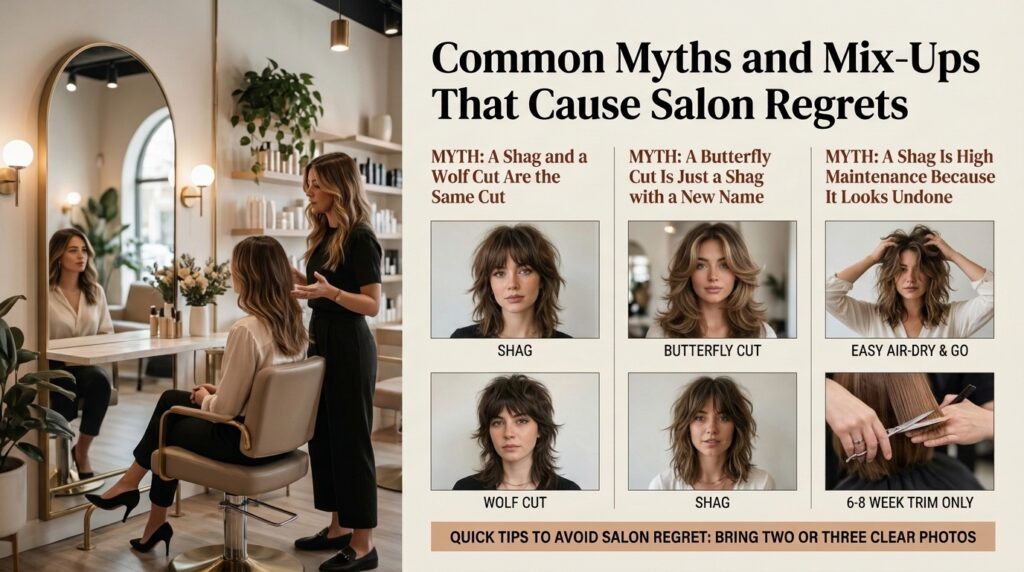
Most bad haircuts come from poor communication. The words “shag,” “layers,” “wolf,” and “butterfly” get mixed up often. When you and your stylist picture two different cuts, you end up unhappy.
Clear up these three myths before your next appointment. A few minutes of clarity can save you months of regrow.
Myth: A Shag and a Wolf Cut Are the Same Cut
They are close, but they are not the same. A shag has a balanced shape with layers all around. A wolf cut mixes a shag with a mullet. It has a short, wild top and a longer back section.
The wolf cut is more dramatic. It has a stronger contrast between the top and the nape. It also needs more regular trims because the top grows out fast.
If you say “shag” and mean “wolf,” you may leave with something too soft. If you say “wolf” and mean “shag,” you may leave with something too wild. Bring a photo and use clear words.
Myth: A Butterfly Cut Is Just a Shag with a New Name
This one fools many people. The butterfly cut and the shag both have face-framing layers. But the finish is very different.
A butterfly cut is built around a smooth, bouncy blowout. The layers are long and blended. It is a layered cut with a special pattern. A shag is built around texture, choppy ends, and a lifted crown.
If you love the look of voluminous waves and swingy hair, you want a butterfly. If you love texture and a bit of mess, you want a shag. They look best with different styling habits too.
Myth: A Shag Is High Maintenance Because It Looks Undone
Many people think a messy look means lots of work. The opposite is true. A well-cut shag is designed to look good with little effort. You can air dry it, add a bit of texture spray, and head out.
The real upkeep is in the trims. A shag holds its shape best with a cut every six to eight weeks. The bangs may need a quick trim even sooner. But daily styling is usually quick.
A layered cut can actually need more daily effort if you want a sleek finish. Blow-drying and flat ironing take time. So do not rule out a shag because you are afraid of the work.
Quick tips to avoid salon regret:
- Bring two or three clear photos
- Use the words “choppy” or “blended” to describe the finish
- Say whether you want bangs
- Talk about how you style your hair at home
- Ask your stylist to explain the plan before they cut
Frequently Asked Questions
What is the main difference between a shag and a layered haircut?
A shag has short, choppy, disconnected layers with a lifted crown and usually bangs. A layered cut has blended layers that flow smoothly and does not need bangs.
Is a shag haircut good for fine or thin hair?
Yes. The short crown layers add lift, and the textured ends make hair look fuller. Ask for softer layers so the ends do not look too thin.
Is a shag the same as a wolf cut?
No. A wolf cut mixes a shag with a mullet and has a wilder top and longer back. A shag has a more even, balanced shape.
Can women over 50 wear a shag haircut?
Yes. A soft, medium-length shag with a light fringe adds body and frames the face. Keep the layers blended and avoid very choppy ends.
How often should I trim a shag haircut?
Trim a shag every six to eight weeks to keep the shape. Bangs may need a quick touch-up sooner.
Final Thoughts
A shag and a layered cut share the same basic idea, but they feel very different. A shag is bold, textured, and full of volume. A layered cut is smooth, flexible, and easy to wear anywhere. Knowing this gap helps you ask for the right haircut and avoid surprises.
Take your time before you book. Look at photos, check the ends and the bangs, and think about your daily routine. If you still cannot decide, a layered shag gives you the best of both. Your hair, your lifestyle, and your comfort should guide the final choice.

Jasper Cole is a content writer and researcher at Faxhion Infoz, focusing on hair care, hairstyles, styling ideas, and hair related topics. He researches information from reliable sources and presents practical insights in simple language. His goal is to help readers better understand hair care and make informed everyday choices.